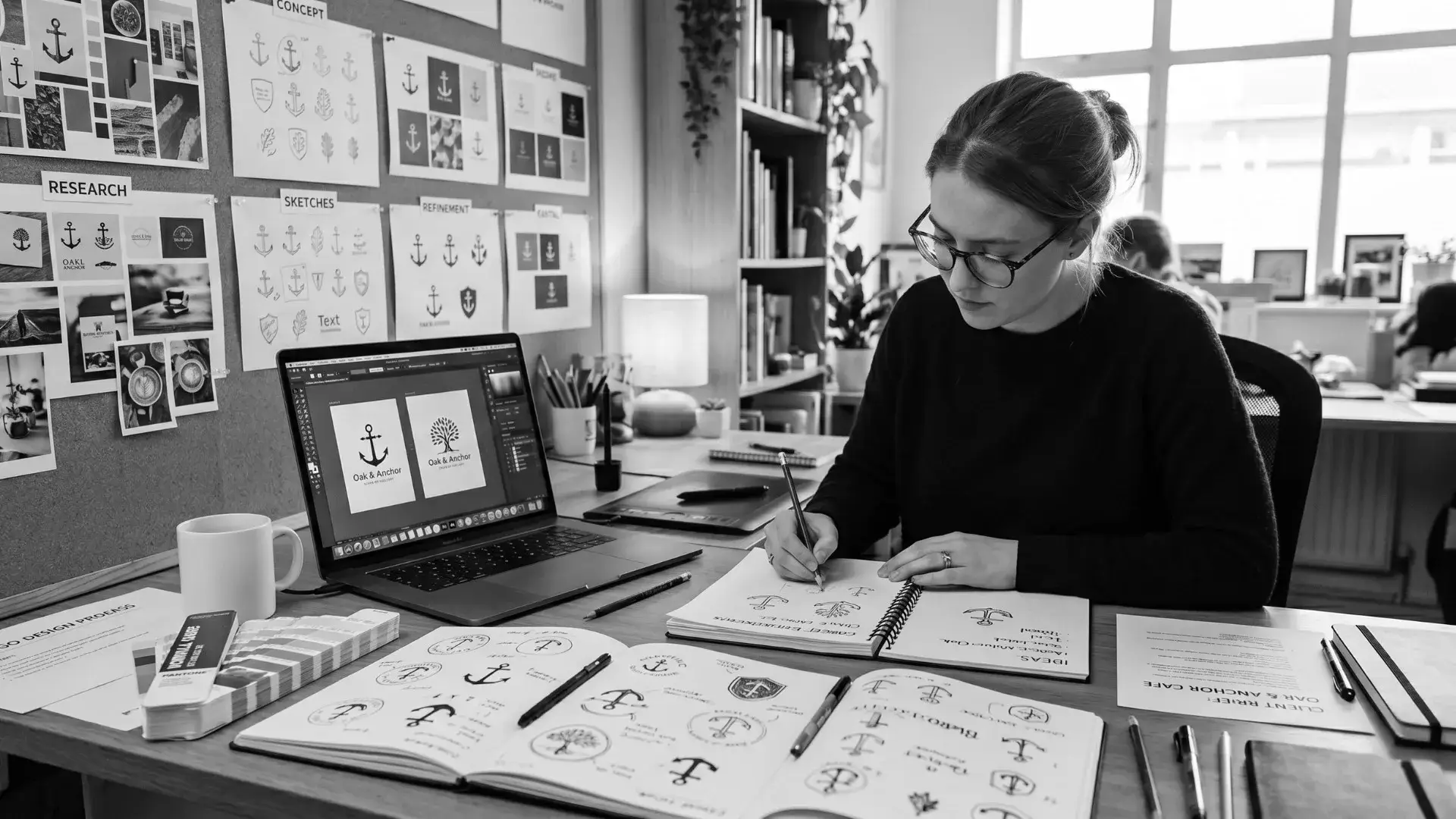
The professional logo design process has 7 stages: discovery, research, brainstorming, sketching, digital design, client presentation and revisions, and final file delivery. The full process typically takes 2 to 4 weeks, depending on feedback turnaround and the number of revision rounds involved.
Most business owners have a rough idea of what they want from a logo. What they are often unsure about is what actually happens between that first conversation with a designer and the moment they receive their final files.
If you are about to hire a logo designer for the first time, or if you have had a poor experience in the past and want to understand what a proper process looks like, this guide is for you. Understanding each stage of the logo design process helps you give better feedback, set realistic expectations, and get a result you are genuinely proud of.
Before diving in, it helps to know what a logo is actually trying to achieve. If you are new to this, our guide on what logo design is and why it matters covers the fundamentals in plain language.
Stage 1: Discovery and Design Brief
Every professional logo design project begins with discovery. Before a single sketch is drawn, a good designer needs to understand your business thoroughly.
This stage typically involves a questionnaire or a one-on-one consultation covering:
• What your business does and who your target customers are
• The values and personality you want your brand to convey
• Your industry and the competitive landscape
• Logos or visual styles you like and dislike
• Where the logo will primarily be used (signage, digital, print, packaging)
• Your budget and timeline
The output of this stage is a clear design brief. This document acts as the strategic foundation for everything that follows. A designer who skips this step and jumps straight into visuals is a red flag. Good logo design is not guesswork.
Stage 2: Research and Competitor Analysis
With the brief in hand, the designer moves into research. This means studying your industry, your competitors, and the visual language your market already uses.
The goal of research is two-fold. First, it ensures the final logo is appropriate for your industry and speaks to your target audience. Second, it ensures your logo stands out from competitors rather than blending in with them.
For an Australian business, this research also considers the local market context. A café in Melbourne requires a very different visual approach from a construction company in Sydney or a skincare brand targeting national e-commerce customers.
This stage usually takes 1 to 2 days, and the findings directly shape the creative direction taken in the stages that follow.
Stage 3: Brainstorming and Art Direction
With research complete, the designer begins exploring creative directions. This is the ideation phase, where multiple approaches are considered before committing to any one direction.
Many designers will produce a mood board or visual direction document at this stage, showing you the general aesthetic territory they plan to explore. This is presented to the client for early alignment before any detailed design work begins.
Getting your feedback at this early stage saves significant time later. If a designer is heading in a direction that does not feel right for your brand, it is far better to course-correct here than after hours of detailed design work.
This stage is also where core design decisions begin to take shape: typography style, colour palette direction, and whether the logo will be icon-based, wordmark-based, or a combination of both.
Stage 4: Sketching and Concept Development
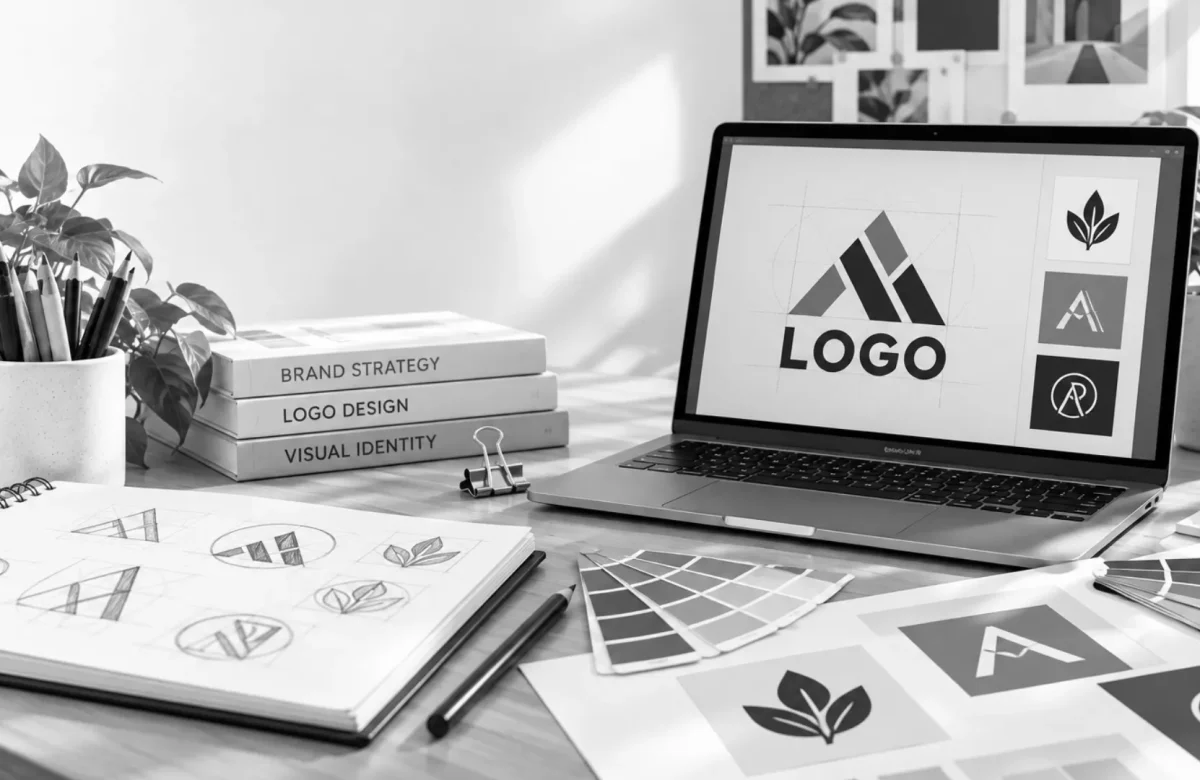
Once the art direction is agreed on, the designer moves into sketching. This is where ideas move from abstract concepts into visual form.
Sketching happens quickly and in volume. A professional designer will generate dozens of rough ideas on paper or digitally before narrowing down to the strongest 2 to 3 directions worth developing further.
This stage is rarely visible to the client, but it is one of the most important parts of the process. The thumbnail sketches made at this point determine the structural foundation of the final logo. Rushing this stage is one of the most common reasons cheap logos fail to stand the test of time.
Stage 5: Digital Design
The strongest sketch concepts are then taken to design software, typically Adobe Illustrator, and developed into polished digital versions.
In this stage, the designer refines the shapes, selects and pairs typefaces, finalises the colour palette, and tests the logo across different sizes and backgrounds. A well-constructed logo must work equally well at the size of a business card and the size of a shopfront sign.
Each concept is also tested in:
• Full colour
• Single colour (black)
• Reversed (white on dark background)
• Simplified or icon-only versions where relevant
This multi-context testing is what separates a professionally designed logo from a template or DIY option. If a logo only works in one specific colour on one specific background, it is not a functional brand asset.
This is also the stage where the connection between your logo and your broader brand identity becomes clear. A logo that is designed in isolation, without considering how it will sit alongside typography, colour, and brand imagery, will always feel incomplete. For a deeper look at how your logo fits into a full visual system, our guide on brand identity design and what it includes is worth reading before you start any logo project.
Stage 6: Presentation, Feedback and Revisions
Once 2 to 3 polished concepts are ready, they are presented to you. A professional presentation does not just show you the logo on a white background. It shows the logo applied to real-world contexts: a business card, a shopfront sign, a social media profile, packaging, and any other surfaces relevant to your business.
This context is critical. A logo that looks interesting in isolation can feel completely wrong when placed on a shopfront. Equally, a logo that looks simple on screen can look stunning at signage scale.
At this point, you provide feedback. Good feedback is specific and focuses on what is or is not working relative to the brief, rather than personal preference alone. Your designer should guide you through this process.
Most professional logo design projects include 2 to 3 rounds of revisions. Each revision round refines the chosen direction based on your input until the design is finalised.
Stage 7: Final File Delivery
Once the logo is approved, the designer prepares and delivers the complete set of final files. This is what you should receive at the end of every professional logo design project:
| File Type | Format | Used For |
|---|---|---|
| Vector master file | AI or EPS | Scaling to any size without quality loss |
| Print-ready file | Sending to printers and suppliers | |
| Web-optimised file | PNG (transparent background) | Website, social media, digital use |
| Web file | SVG | Web development, scalable digital use |
| Favicon | ICO or small PNG | Browser tab icon |
| Colour variations | All formats | Full colour, black, white, reversed |
A professional logo package should also include a basic brand style guide covering your logo colours (in HEX, RGB, and CMYK codes), approved fonts, and clear usage guidelines.
If a designer delivers only a JPG file, that is not a complete logo package. Always confirm what files are included before starting a project.
For guidance on what a fair investment looks like for this level of service in your area, our logo design cost guide for Melbourne and Australia breaks down pricing by designer tier and what is included at each level.
How Long Does the Logo Design Process Take?
A professionally designed logo typically takes 2 to 4 weeks from the initial brief to final file delivery. Here is a realistic timeline breakdown:
| Stage | Typical Duration |
|---|---|
| Discovery and brief | 1 to 2 days |
| Research and mood board | 1 to 2 days |
| Sketching and concept development | 2 to 4 days |
| Digital design of concepts | 3 to 5 days |
| Client presentation and feedback | 2 to 5 days (depends on client turnaround) |
| Revision rounds (2 to 3 rounds) | 3 to 7 days |
| Final file preparation and delivery | 1 to 2 days |
The biggest variable in any logo project timeline is client feedback speed. Prompt, clear feedback keeps the project moving. Delays in responding or requesting major directional changes after the design phase can extend the timeline significantly.
Rush timelines are possible but generally compromise the depth of research and concept development. For a logo that will represent your business for the next 5 to 10 years, the standard 2 to 4 week timeline is the right investment of time.
What Should You Receive at the End?
• Beyond the files listed above, a complete logo delivery should include:
• All logo variations (horizontal, stacked, icon only where applicable)
• All colour versions (full colour, black, white, reversed)
• A brand style guide covering colour codes, fonts, and usage rules
• Written confirmation that you own the copyright to the final design
Ownership of the final logo is an important point often overlooked by business owners. In Australia, copyright in original design work vests with the creator by default unless it is specifically assigned to you in writing. Always confirm that copyright assignment is included in your agreement before the project begins.
If you are planning to grow your brand beyond the logo itself, the next natural step is a full brand identity system. Our brand identity design service builds on your logo to create a complete visual language for your business, including colour, typography, imagery style, and brand guidelines.
FAQ
How many logo concepts will I receive?
Most professional logo designers and agencies provide 2 to 3 distinct concepts for you to choose from. Be cautious of services offering 10, 20, or unlimited concepts, as this typically signals a template-based or low-quality approach rather than a strategic, custom process.
How many revisions are included in a logo design project?
The standard for professional logo design is 2 to 3 rounds of revisions. Each round refines the chosen concept based on your feedback. Additional rounds beyond the agreed number may incur extra fees, so clarify this upfront.
Can I use my logo on signage, packaging, and merchandise?
Yes, provided you have been given the correct vector files (AI, EPS, or SVG) and copyright has been assigned to you. Vector files can be scaled to any size without quality loss, making them suitable for everything from business cards to building signage.
What is the difference between a logo and a brand identity?
A logo is a single mark that identifies your business. A brand identity is the complete visual system built around that logo, including colour palette, typography, graphic elements, photography style, and brand guidelines. A logo alone is a starting point; a brand identity gives your business a cohesive, professional visual presence across every touchpoint.
How do I know if a logo designer is right for my business?
Look for a designer who asks strategic questions about your business before discussing visuals. A designer who jumps straight to “what style do you like?” without understanding your audience, industry, or goals is likely prioritising aesthetics over strategy. Review their portfolio for range and relevance to your industry, and ask for a clear breakdown of their process and deliverables.
How much does professional logo design cost in Australia?
Professional logo design in Australia typically ranges from $500 to $5,000 for small to medium businesses, depending on the designer’s experience and the scope of work. For a detailed breakdown by tier and what you should expect at each price point, see our full logo design cost guide.
Conclusion
The professional logo design process is a structured, collaborative journey from discovery through to final delivery. Here are the three things to take away:
- A proper logo design project starts with strategy, not sketching. Discovery, research, and brief development are what separate a thoughtful result from a generic one.
- Expect the full process to take 2 to 4 weeks. Rushing a logo that will represent your business for years is rarely worth it.
- Always confirm your file deliverables and copyright ownership before the project begins.
Ready to start your logo design project with a team that follows a proven process? View our logo design service or get in touch with the Saga Designs team to discuss your project.