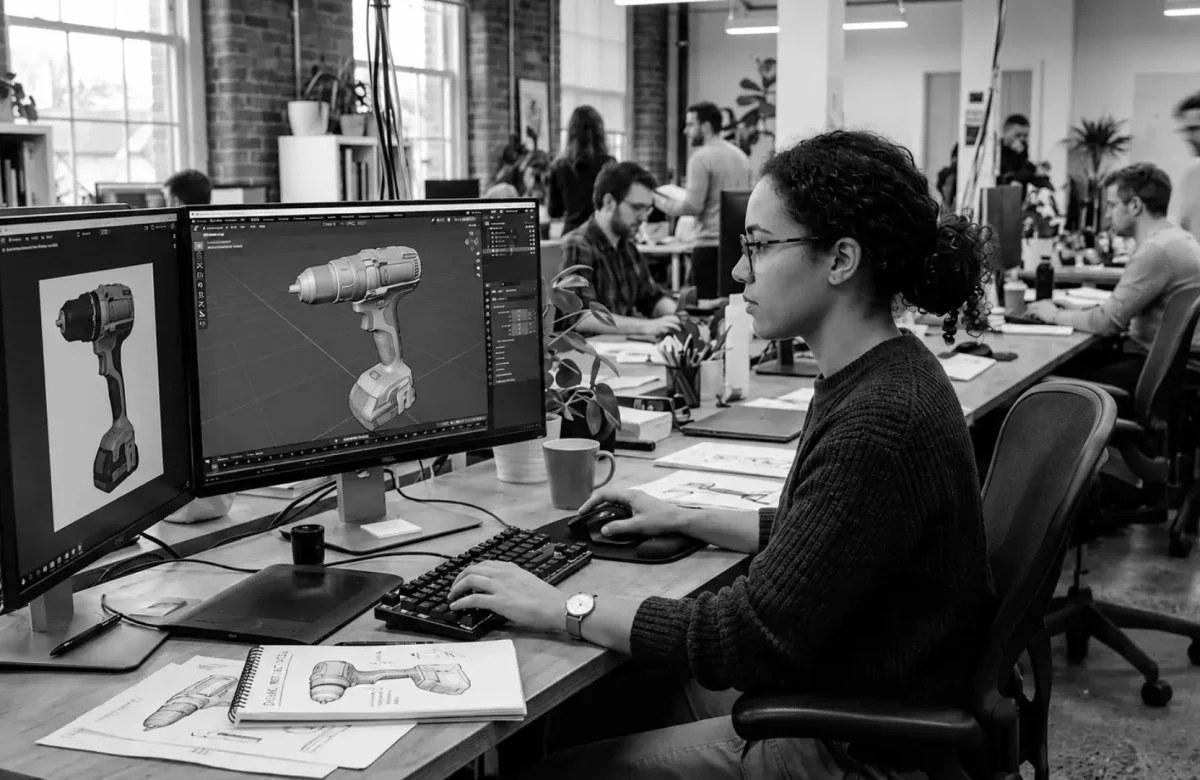

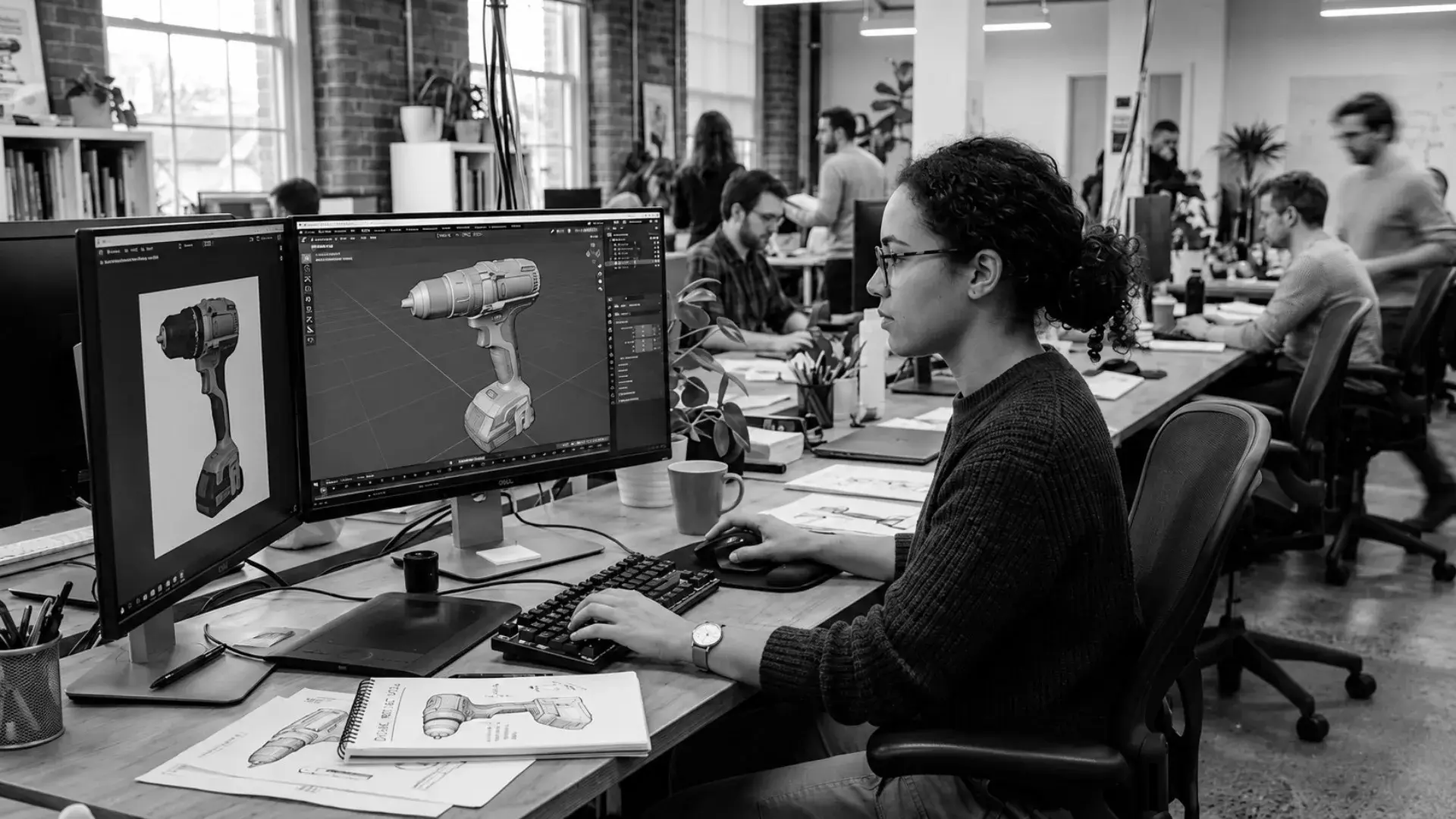
No, 3D modeling is not getting fully replaced by AI. AI tools are changing how 3D artists work, speeding up tasks like texturing, rendering, and prototyping. But human creativity, storytelling, and technical judgment are still needed for quality work. If you work in 3D modeling, you have probably asked yourself this question. AI tools are getting faster, cheaper, and easier to use every day. From text-to-3D generators to AI rendering software, it feels like the whole industry is shifting.
This blog looks at what AI can actually do in 3D modeling, where human skill still wins, and what it means for designers and studios, especially in the Australian market.
Key Takeaways:
- AI speeds up 3D workflows, but cannot fully replace skilled 3D modelers
- Tools like Meshy, Spline AI, and Adobe Substance are already in use by professionals
- Australian 3D design and visualisation studios are combining AI with traditional methods
- Human creativity, emotional storytelling, and client-facing work remain in demand
- 3D artists who learn AI tools will have a career advantage over those who avoid them
- The Australian interior design and architecture sectors continue to grow, keeping demand for quality 3D work high
What Is AI Actually Doing in 3D Modeling Right Now?
AI is automating the boring parts of 3D modeling, like texturing, UV unwrapping, and early draft meshes, so artists can focus on creative work. The growth is real. The global 3D modeling market is expected to grow at around 20% per year, and a big part of that growth comes from AI tools making the process faster and more accessible.
Here is what AI tools are doing right now:
Text-to-3D Generation: Tools like Meshy.ai let you type a prompt and get a 3D model in minutes. It is useful for quick prototypes and concept work, though the quality still needs a human to clean it up.
AI-Assisted Texturing: Adobe Substance 3D uses AI to generate realistic textures and materials. Instead of painting textures from scratch, artists can generate a base and refine it. This saves hours on a single project.
Rendering Speed: AI-powered rendering tools cut down processing time significantly. Studios can now produce more renders in less time, which helps with client turnaround.
Automatic Retopology: Tools like Meshcapade can automate retopology, a task that is time-consuming and rarely creative. This gives artists back hours they would have spent on technical groundwork.
The bottom line is that AI is handling the repetitive, technical parts of 3D work. That leaves more time for the parts that require human judgment.
Will AI Replace 3D Artists? Here Is the Real Answer
No. AI will change the role of 3D artists, but it will not replace them. Human creativity, emotional understanding, and visual judgment cannot be replicated by a machine. This is not just an opinion. Industry experts agree on this point. According to professionals surveyed by KeyShot, the consensus is that 3D artists are not going to become obsolete, but they absolutely need to adapt.
One expert put it plainly: “You can quickly generate an image of a chair and a 3D model too, but it’s going to be a huge leap to replace the designer who brings it to life.”
Here is why human 3D artists are still essential:
Creativity and storytelling: AI has no real-world experiences or emotions. It works by recombining things it has seen before in its training data. It cannot be created from a truly original place. A human modeler draws from culture, personal experience, and visual instinct in ways AI simply cannot match.
Client work and communication: Working with clients means listening, adjusting, and understanding what they actually want vs what they say they want. AI tools cannot do this.
Technical accuracy for professional use: AI-generated images can contain geometry errors and scale issues. They are fine for early concept work but are not reliable for planning approvals, investor presentations, or manufacturing specifications.
Artistic direction: Someone still needs to decide the visual style, the mood, and the lighting approach. AI is a tool that executes. Humans are the ones who direct.
The fear is understandable. Around 55% of artists worry that AI will hurt their ability to earn. But the evidence suggests the bigger risk is not learning to use AI tools at all.
What Can AI Not Do in 3D Modeling?
AI still struggles with complex, original design, accurate proportions, and work that requires multi-view consistency or regulatory compliance. This is where the honest limits of AI become clear. Research from professional visualisation studios shows that AI-generated visuals often have flat textures, incorrect scaling, and lifeless scenes. For quick concept images, that might be acceptable. For client-ready work, it is not good enough.
Here is what AI cannot reliably do:
Produce geometry-consistent work: When you build a 3D model the traditional way, every camera angle references the same geometry, so everything matches. AI-generated concept images are created from prompts and do not have this consistency. This is a big problem for architecture, product design, and anything that needs to be built or manufactured.
Understand design intent: A designer knows why a wall is placed where it is, or why a product is a certain size. AI does not understand intent. It makes guesses based on patterns.
Meet regulatory requirements: In Australia, architectural and construction designs need to meet strict standards. AI tools are not equipped to handle compliance, approvals, or documentation in any reliable way.
Replace the human creative spark: As one industry expert noted, AI struggles to generate highly complex and believable models from scratch without human guidance. The main limitations are imagination, originality, and composition.
How Is This Affecting Australian 3D Designers and Studios?
Australian 3D designers are adopting AI tools to stay competitive, but demand for skilled human artists remains strong across architecture, interior design, gaming, and visualisation. The Australian interior design market was valued at USD 2.51 billion in 2024 and is projected to reach USD 3.85 billion by 2033. Across Sydney, Melbourne, and Brisbane, studios are using 3D visualisation to win clients and present projects. That demand is not going away.
Australian job platforms like SEEK and LinkedIn currently list hundreds of open roles for 3D modellers, CAD designers, and architectural drafters. Many of these roles now list AI-powered workflows as a bonus skill, not as a replacement for technical ability. One listing on SEEK described itself as a “remote-first, AI-powered workflows” role, but still required strong modelling and engineering skills.
Sydney-based visualisation company Pitchbox highlights that studios combining AI tools with experienced artists are the ones staying ahead. Their approach is to use AI to speed up project timelines while relying on skilled professionals for final quality and client communication.
The Australian freelance market, through platforms like Airtasker, continues to show strong demand for 3D modellers, renderers, and CAD designers. Clients are even specifically requesting work by human designers, with some listings on Airtasker explicitly noting “not AI-generated work.”
How Should 3D Artists Respond to AI?
The best move for any 3D artist right now is to learn AI tools as part of their workflow, not ignore them or fear them. Industry experts are aligned on this. Many 3D artists are using AI assistance in their workflow. The artists who combine traditional skills with AI knowledge will be more productive and more valuable to employers and clients.
Here are practical steps 3D artists can take:
Learn one AI tool at a time: Start with something that addresses a pain point in your workflow. If texturing takes forever, explore Adobe Substance AI features. If you need quick concept variations, try Meshy or Luma Labs Genie.
Use AI for early-stage work: The smartest studios use AI to generate concept options fast, then bring human artists in for the detailed modeling, lighting, and final renders.
Build skills AI cannot replace: Work on your ability to art direct, present to clients, tell visual stories, and solve complex problems. These are the skills that keep you relevant.
Study prompt engineering: Understanding how to get the best results from AI tools is becoming a genuine skill in the industry. Learn it.
Do not outsource your creative judgment: AI can give you options. Only you can decide which option is right for the project, the client, and the story you are trying to tell.
What Does the Future of 3D Modeling Look Like?
The future of AI 3D modeling is a human-AI partnership focused on creativity and efficiency. AI handles speed and scale, while humans provide direction, creativity, and quality control. Within the next five years, AI-generated models could match human quality for around 60% of basic applications. That means simple assets, early-stage concepts, and background elements may increasingly be AI-assisted. But the detailed work, the complex architecture, the character modeling, the brand-defining product renders, all of that will still need skilled hands and experienced eyes.
Autodesk, one of the biggest names in 3D software, introduced its AI assistant to help design teams work faster and collaborate better. The goal is not to remove designers from the process. It is to remove the friction so designers can focus on what they are actually good at.
The studios that will lead the industry in five years are the ones building hybrid workflows right now.
Frequently Asked Questions
Will AI completely replace 3D modeling jobs in Australia?
No. While AI is changing how 3D work gets done, demand for skilled 3D modellers in Australia remains strong. SEEK and LinkedIn currently list hundreds of open roles across architecture, gaming, and product design. AI is more likely to become a standard tool in these jobs rather than a replacement for them.
What AI tools are 3D artists using for modeling and rendering in 2026?
Popular AI tools for 3D modeling include Meshy.ai for text-to-3D generation, Adobe Substance 3D for AI-powered texturing, Luma Labs Genie for concept models, and Autodesk’s AI assistant for design workflows. Most of these work alongside traditional software like Blender, Maya, and 3ds Max rather than replacing them entirely.
Is AI-generated 3D content good enough for professional client presentations?
Not consistently. AI-generated 3D visuals often have flat textures, incorrect proportions, and scale errors. For rough concept work, they can be useful. For client-ready presentations, planning approvals, or investor materials, traditional 3D modeling still produces more reliable and accurate results.
How much does AI reduce 3D modeling production time?
Studies from game studios suggest AI-assisted workflows can reduce production time for standard assets by around 60%, and modeling costs by 60-80% for environmental and background elements. However, realistic overall workflow acceleration is typically between 20-35%, not the extreme figures sometimes claimed online.
Should I learn AI tools if I am starting a career in 3D modeling in Australia?
Yes. Learning AI tools alongside traditional 3D modeling skills will make you more competitive in the Australian job market. Employers are increasingly looking for artists who can use AI tools to work more efficiently. Skills in software like Blender, Maya, or ArchiCAD remain essential, but AI knowledge is quickly becoming expected.
Is there still demand for freelance 3D modellers in Australia?
Yes. Platforms like Airtasker, Upwork, and Freelancer continue to show strong demand for 3D modellers in Australia. Clients regularly hire for architectural visualisation, product design, CAD drafting, and game asset creation. Some clients explicitly ask for human-made work rather than AI-generated output, particularly for complex or brand-sensitive projects.
Conclusion
AI is not replacing 3D modeling. It is changing how 3D modeling works. The artists who adapt, learn the tools, and keep sharpening their creative and technical skills will do well. Those who either panic or ignore the shift entirely will struggle. If you are a designer, studio, or business in Australia looking to work with a professional 3D product modeling agency that balances smart AI-assisted workflows with expert human creativity, SAGA Designs can help. The right approach is not AI or humans. It is AI with humans.