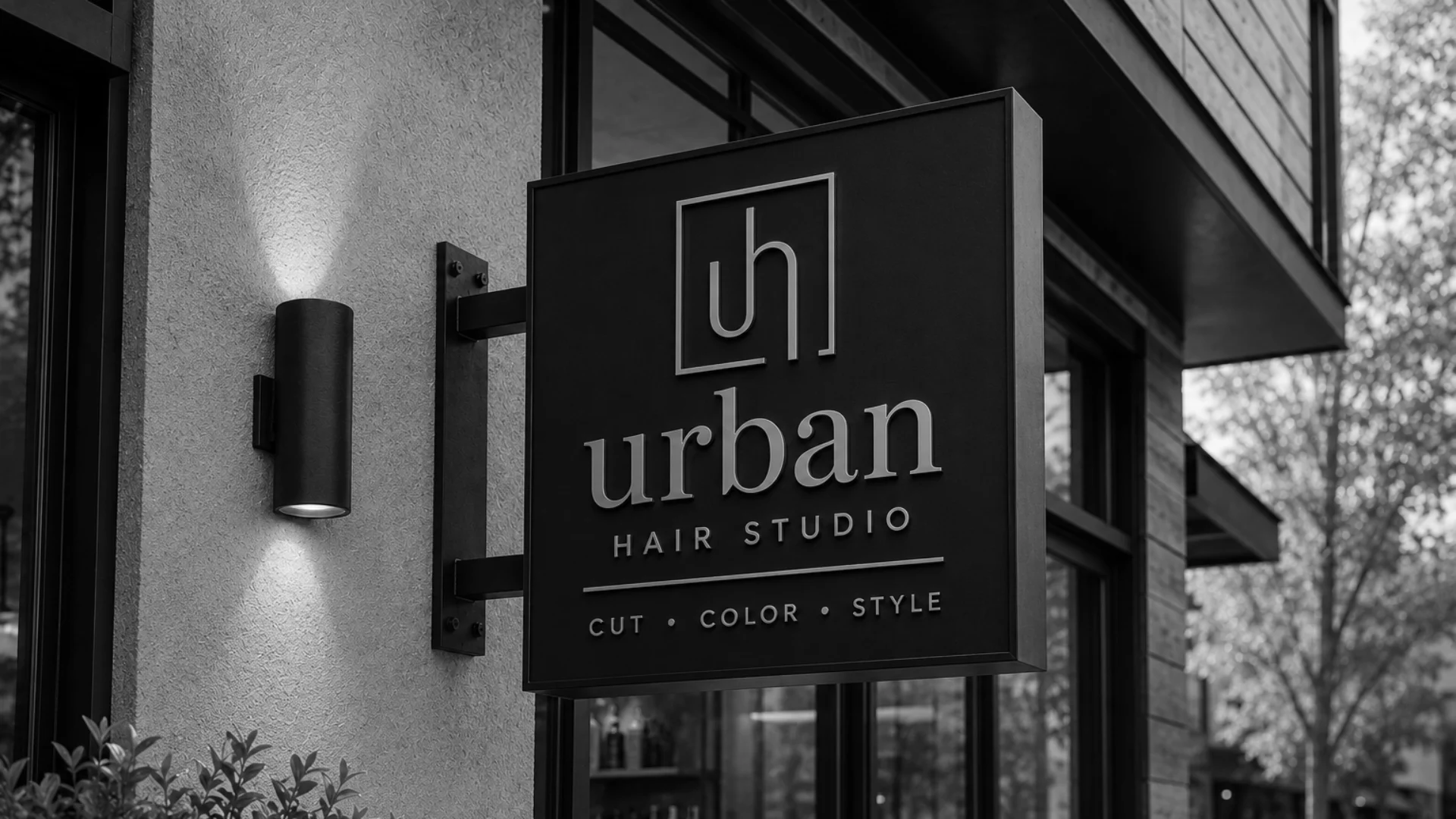
The best outdoor signage materials for Australian weather are aluminium composite panels (ACP), acrylic, PVC, and cast vinyl. Each handles UV exposure, heat, rain, and wind differently. The right choice depends on how long you need the sign to last, where it will be installed, and how much you’re willing to spend.
Australian weather is hard on outdoor signage. One week it’s 40°C and blazing sun in western Melbourne. Next, it’s strong winds and driving rain down the coast. In Queensland and the Northern Territory, humidity and UV levels are among the highest in the world. In regional Victoria and South Australia, temperature swings between seasons put materials through constant stress.
Choosing the wrong outdoor signage material doesn’t just look bad. It costs you money. A sign that fades, warps, or peels after one summer needs replacing, and that means paying for design, print, and installation all over again.
This guide breaks down which outdoor signage materials hold up in real Australian conditions, what each one costs to maintain, and how to match the right material to your location and budget.
Key Takeaways
• Australia has some of the highest UV levels in the world. Outdoor signage materials must be UV-resistant to avoid fading, warping, or cracking within the first year.
• Aluminium composite panels (ACP) are the most durable long-term option for permanent outdoor signage. They are weather-resistant, rigid, and maintain a professional appearance for years.
• Acrylic is the best choice for illuminated and backlit signage. It handles temperatures from -30°C to 90°C, making it suitable for every Australian climate.
• Corflute and vinyl banners work well for short-term campaigns of three to twelve months. They are not suited for permanent outdoor signage in harsh Australian conditions.
• Matching your signage material to your location matters. Coastal businesses need corrosion-resistant materials like marine-grade aluminium or stainless steel. Inland businesses in hot, dry climates need materials rated for high UV and heat exposure.
What makes Australian weather so demanding on outdoor signage?
Australian weather is uniquely challenging for outdoor signage because of the combination of extreme UV radiation, heat, humidity, and rapid temperature changes that occur across different regions.
Australia experiences some of the highest UV levels in the world. That UV exposure is the single biggest cause of signage failure. It breaks down pigments, weakens substrates, and causes colours to fade within months if the wrong material is used.
Beyond UV, Australian businesses deal with very different climate challenges depending on where they operate. A business in Darwin faces constant humidity and tropical downpours. A business in Alice Springs deals with extreme heat and desert dust. A business in Melbourne or Dandenong deals with all four seasons in a single week. A coastal business anywhere from Perth to Sydney faces salt air, which accelerates corrosion in metal-based signs.
Understanding your local climate conditions is the first step to choosing signage materials that won’t let you down.
Which outdoor signage material lasts the longest in Australia?
Aluminium composite panel (ACP) is the most durable outdoor signage material for permanent installations in Australia. It resists UV radiation, rain, heat, and corrosion, and it maintains a flat, professional surface for years without warping.
ACP is widely considered the best material for outdoor signage in Australia because it offers excellent durability, weather resistance, and a long lifespan.
ACP is made from two thin sheets of aluminium bonded to a solid polyethene core. The aluminium surface resists corrosion, and the core keeps the panel rigid and flat even in extreme heat. This is important in Australian summers, where cheaper sign materials bend or bubble when temperatures exceed 35°C.
For businesses investing in a permanent shopfront sign, building-mounted lettering, or a wayfinding panel, ACP is the material that gives you the longest return on your investment without ongoing maintenance costs.
If you’re also thinking about the design of your signage, our post on outdoor signage options for small businesses covers the different sign types that work well with ACP and other durable materials.
What is the best material for illuminated outdoor signage?
Acrylic is the best material for illuminated and backlit outdoor signage in Australia. It is UV-resistant, lightweight, and handles the full range of Australian temperatures without cracking or yellowing.
Acrylic can continuously operate and withstand temperatures ranging from -30 degrees to 90 degrees Celsius, making it suitable for diverse climates all over Australia.
Acrylic is commonly used for lightbox signs, LED-backlit panels, and illuminated shopfront lettering. It allows light to pass through evenly, which means your sign looks sharp and bright at night without hot spots or uneven glow.
It is lightweight compared to glass, which makes installation easier and reduces the load on your building facade. It can also be cut and shaped to match your brand’s logo or custom letter forms, which gives you flexibility in how the sign looks.
One thing to keep in mind is that acrylic can scratch. For signs in high-traffic areas where contact is likely, a protective hard coat or anti-scratch laminate is worth considering. Regular cleaning also prevents surface dulling over time.
Our signage design team works with acrylic suppliers across Melbourne and Victoria to make sure the material grade and finish match your installation environment before any fabrication begins.
When should you use vinyl for outdoor signage?
Vinyl is the right choice for temporary outdoor signage campaigns, banners, window graphics, and vehicle wraps. It is not suited to permanent outdoor signage in harsh Australian conditions.
Vinyl banners are highly resistant to rain, wind, and UV rays, making them a great choice for unpredictable weather conditions. Cast vinyl, which is the premium grade, lasts five to seven years outdoors and is used for vehicle wraps and demanding outdoor applications. Calendered vinyl is a more affordable grade suited to campaigns of twelve months or less.
Vinyl works well for businesses that need to change their signage frequently, such as retail stores running seasonal promotions, or for event signage that needs to be installed and removed. It is lightweight, easy to print on in large formats, and can be applied to windows, walls, fences, and scaffolding.
For permanent signage, vinyl is not the right answer. It will eventually peel at the edges, fade in direct UV exposure, and degrade faster than rigid panel materials. If you’re unsure whether your project needs vinyl or a rigid material, the signage installation process we follow at Saga Designs includes a material recommendation as part of every brief.
What are the most cost-effective outdoor signage materials for short-term use?
Corflute and PVC are the most cost-effective outdoor signage materials for short-term campaigns lasting three to twelve months.
Corflute boards are lightweight polypropylene signage panels widely used across Australia. They are ideal for temporary signage campaigns and promotional advertising.
Corflute is inexpensive, easy to print on, and light enough to handle without specialist installation. It is commonly used for real estate signs, event directional signage, and short-term retail promotions. It is not a permanent solution. UV exposure causes corflute to become brittle and crack, and it doesn’t hold up well in strong winds over extended periods.
PVC board is a step up from Corflute in durability. PVC can withstand temperatures up to 60°C without significant deformation, making it a practical option for hot Australian conditions. It is weather-resistant, easy to cut and shape, and holds print quality well. It costs more than corflute but less than ACP, making it a practical middle-ground for businesses that need something more durable than a banner but don’t need a permanent installation.
If you are comparing material options for your signage project, our guide on types of business signage in Australia covers how different sign formats pair with different material choices.
Which signage materials work best in coastal Australian locations?
Coastal businesses in Australia need signage materials that resist salt air and moisture corrosion above all else. The best options are marine-grade aluminium, stainless steel, and ACP with sealed edges.
Salt air accelerates corrosion in standard metal-based signs. Marine-grade aluminium composite panels or marine-grade vinyl are better suited to wet conditions in coastal regions.
Standard aluminium corrodes over time in salt-heavy coastal air unless it is treated or powder-coated with a marine-grade finish. Stainless steel is the most corrosion-resistant metal option for coastal signage, but it costs significantly more than aluminium. For businesses that want the look of metal at a more accessible price point, ACP with a marine-grade powder-coat finish is the most practical option.
Acrylic also performs well in coastal environments because it does not corrode. It needs a UV-stabilised grade to prevent yellowing in high-UV coastal locations. PVC is moisture-resistant but can degrade faster in salt air than ACP or acrylic.
If your business is located near the coast, always discuss your location with your signage designer before selecting materials. The installation method also matters. Sealed edges and stainless steel fixings prevent moisture from entering the sign structure from behind, which is one of the most common causes of coastal signage failure.
Frequently Asked Questions
What is the most durable outdoor signage material for Australian weather?
Aluminium composite panel (ACP) is the most durable outdoor signage material for permanent use in Australian weather. It resists UV radiation, heat, rain, and corrosion, and it stays flat and professional-looking for years. ACP works across all Australian climates and is the go-to choice for shopfront signs, building-mounted lettering, and long-term outdoor displays.
How long does outdoor signage last in Australia?
The lifespan depends on the material and your local climate. ACP panels can last ten or more years with minimal maintenance. Acrylic signs typically last five to ten years. Cast vinyl lasts five to seven years. PVC board lasts two to five years, depending on UV exposure. Corflute is designed for short-term use of three to twelve months and degrades quickly in direct sunlight.
Can vinyl banners withstand the Australian summer heat?
Yes, vinyl banners can handle Australian summer heat for short-term campaigns. They are UV-resistant and waterproof, making them suitable for temporary outdoor use. However, vinyl is not a permanent signage solution. Extended UV exposure causes calendered vinyl to fade and peel. For long-term outdoor signage, rigid materials like ACP or acrylic perform significantly better.
What signage material is best for a coastal business in Australia?
Marine-grade aluminium composite panels or stainless steel are the best options for coastal businesses. Both resist salt air corrosion, which is the primary cause of signage failure in coastal locations. ACP with sealed edges and stainless steel fixings is the most cost-effective choice. Standard aluminium, PVC, and untreated metals corrode faster in salt-heavy coastal environments.
Is acrylic a good material for outdoor signage in hot Australian climates?
Yes. Acrylic is UV-resistant and handles temperatures up to 90°C without significant deformation, making it well-suited to hot Australian climates. It is most commonly used for illuminated and backlit signage. In very hot inland locations, a UV-stabilised grade of acrylic is recommended to prevent yellowing over time. Regular cleaning also extends its lifespan and maintains colour clarity.
What is the cheapest outdoor signage material that still looks professional?
PVC board is the most affordable outdoor signage material that still delivers a professional result for small businesses. It is weather-resistant, easy to print on, and holds up for two to five years, depending on UV exposure. Corflute is cheaper but is best suited to short-term campaigns only. For long-term professional signage, the additional investment in ACP or acrylic pays for itself through a longer lifespan and lower replacement costs.
Conclusion
Choosing the right outdoor signage material is one of the most practical decisions a business makes when investing in signage. The wrong material costs more in replacements than the premium material would have cost upfront. ACP for permanent signs, acrylic for illuminated displays, cast vinyl for campaigns, and marine-grade aluminium for coastal locations. Those are the foundations.
Working with an experienced signage provider ensures the correct material, finishing, and installation method are selected for your specific environment. Saga Designs works with businesses across Melbourne, Dandenong, and regional Victoria to design and produce outdoor signage built for real Australian conditions. Get in touch and let’s talk about what your signage project needs.