
Good signage design directly affects foot traffic. Research shows that well-designed exterior signs can increase walk-in customers by up to 50%, while poor signage causes 77% of consumers to struggle finding a business altogether. For small businesses, your sign is often the first impression you make, and first impressions decide whether someone walks in or walks past.
Key Takeaways
• Your sign is your first impression. Most customers decide whether to enter a business within seconds of seeing its signage.
• Poor signage loses real customers. 77% of consumers have struggled to find a business because of unclear or badly designed signs (VistaPrint AU).
• Three things drive results: visibility, clarity, and brand consistency. Get these right, and your sign works for you every hour of the day.
• Bad design actively repels people. Around 40% of consumers judge a business’s quality based on the condition and appearance of its signage.
• Signage works best as part of a system. A sign that matches your logo, colours, and brand identity builds recognition faster than one designed in isolation.
• Professional signage pays for itself. Businesses that upgrade to professionally designed signs report foot traffic increases of more than 50%.
Why Your Sign Is More Than Just a Name on a Wall
Your sign does far more than display your business name. It communicates your quality, your personality, and whether you’re worth a customer’s time, all in a few seconds.
Think about walking down a busy Melbourne street. You pass three cafes. One has a faded, hand-painted sign with peeling edges. The second has nothing visible from the footpath. The third has a clean, well-lit sign with clear fonts and consistent branding. Which one do you walk into?
Most people choose the third. That’s not a coincidence. According to a FedEx Office survey, 68% of consumers believe the quality of a business’s signage reflects the quality of its products and services. Your sign is making a sales pitch before your staff ever says hello.
For Australian small businesses competing in busy retail strips, shopping centres, or suburban high streets, signage services and signage design for small businesses is one of the highest-impact, lowest-ongoing-cost investments you can make.
How Does Poor Signage Actually Cost You Customers?
Poor signage actively loses customers. It’s not just about missed opportunities; it’s about people making a decision to avoid your business.
According to VistaPrint AU, 77% of consumers have struggled to find a business because of poor signage. A sign that is too small, too cluttered, or too faded creates friction. Customers don’t want to work to find you. If your sign doesn’t clearly communicate who you are and where you are, many people will simply move on.
The numbers are direct. A study referenced by the Federal Highway Administration found that businesses with inadequate signage can lose between 30% and 60% of potential customers through simple invisibility. That’s not customers who tried you and left. That’s customers who never knew you existed.
Bad signage also damages perception. Research from North American retailers found that around 40% of consumers make assumptions about a business’s overall quality based on the cleanliness and upkeep of its signage. A dirty or outdated sign doesn’t just fail to attract people. It actively repels them.
What Makes Signage Design Actually Drive Foot Traffic?
Effective signage design for a small business comes down to a few non-negotiable elements: visibility, clarity, and brand consistency.
Visibility
Your sign needs to be seen before it can do anything else. This means choosing the right size, placement, and contrast. Industry guidelines recommend that lettering should be at least 1 inch tall for every 25 feet of viewing distance. A sign readable only from directly in front of your door is almost useless for drawing in passing foot traffic.
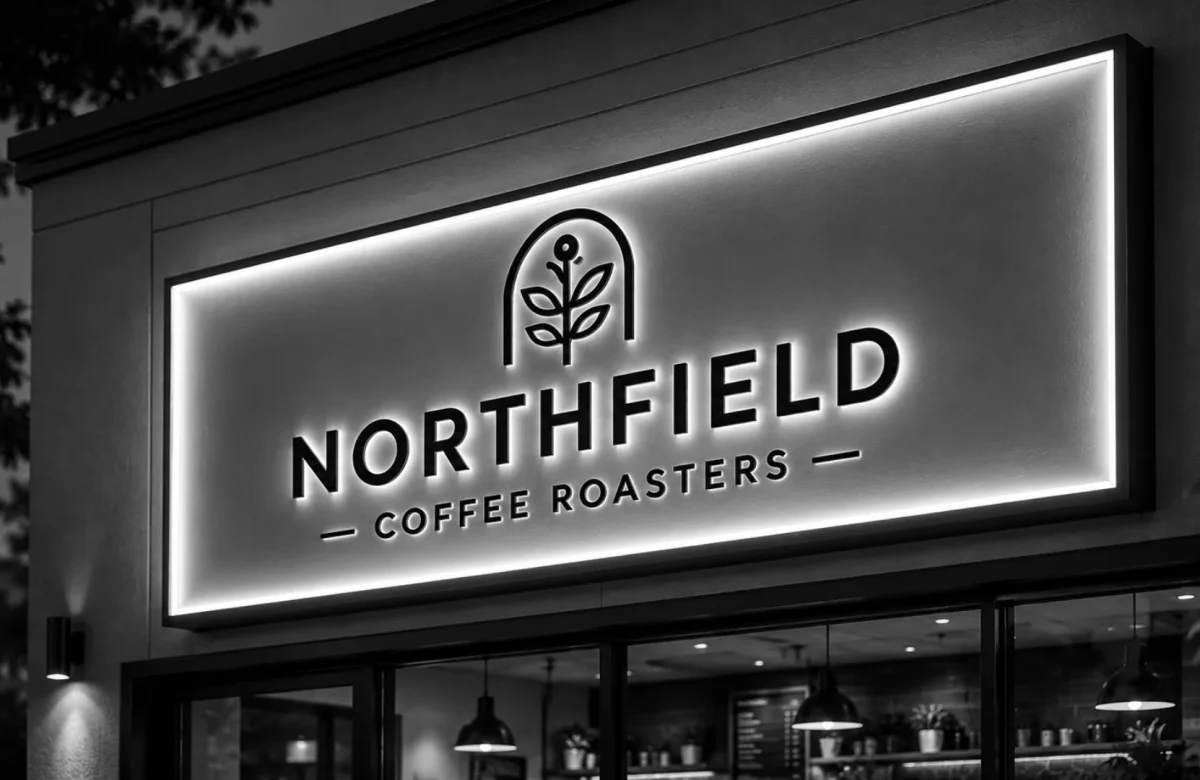
Lighting matters too, especially for businesses open in the evening. An illuminated sign keeps your storefront visible after dark and signals that you’re open and professional.
Clarity
Cluttered signs don’t work. When a passerby has only two or three seconds to read your sign, every word and element has to earn its place. Clear fonts, a simple message, and strong contrast between text and background are the basics. Anything that makes your sign harder to read instantly reduces its effectiveness.
A good rule: if you can’t read it clearly from across the street, it needs rethinking.
Brand Consistency
Your sign should match your overall brand. The colours, fonts, and tone should be consistent with your logo, your packaging, your website, and everything else your business puts out. Inconsistency creates confusion. Consistency builds recognition.
When customers see your sign multiple times, brand recognition builds. Over time, that recognition translates into trust, and trust converts into visits. You can read more about how this works in our guide on what is brand identity design.
What Types of Signage Have the Biggest Impact on Foot Traffic?
Not all signs do the same job. Understanding which type of signage you need is part of getting the design right.
Exterior Storefront Signs
This is the primary driver of foot traffic. Your main sign above or beside your entrance is what passersby see first. It needs to clearly state your business name and give a visual cue about what you offer. This is where investment in professional design pays off most.
Window Graphics
Window graphics are underused by many small businesses. They give you a large canvas to communicate your offer, promote a sale, or simply make your shopfront more visually appealing. Well-designed window graphics also stop people who are already walking past your door, which is the easiest foot traffic to convert.
A-Frame and Footpath Signs
For cafes, restaurants, and retail shops, a well-placed A-frame sign on the footpath captures pedestrians who might not look up at your shopfront. A clear daily special, a short punchy message, or even a clever line can pull people in who wouldn’t have noticed you otherwise.
Wayfinding and Directional Signs
If your business is not directly on a main street, directional signage is not optional. Without clear wayfinding, customers who intended to visit you may simply give up and go elsewhere. According to a Sign Research Foundation report cited by Shopify Australia, 61% of US consumers failed to find a business because its sign was too small or unclear.
To see what signage options suit your business, our post on outdoor signage options for small businesses covers the main types in detail.
How Does Signage Design Connect to Your Broader Brand?
Signage doesn’t exist in isolation. It’s part of your complete brand identity, sitting alongside your logo, packaging, print materials, and digital presence.
When your signage is designed with the same visual language as the rest of your brand, the effect compounds. A customer who has seen your logo online and then recognises your sign on the street is far more likely to walk in than someone seeing your sign cold for the first time.
This is why signage design works best when it’s created alongside, or informed by, your broader brand identity. The colours your sign uses should come from your brand identity design guidelines. The fonts should match your logo. The tone should reflect who you are as a business.
Getting this right doesn’t have to be complicated. It starts with having a solid logo and knowing your brand colours and fonts. From there, applying them consistently to signage is straightforward. You can see how signage fits into the broader identity system by reading about the elements of brand identity.
What Are the Most Common Signage Design Mistakes Small Businesses Make?
Knowing what to avoid is as useful as knowing what to do. These are the signage mistakes that consistently cost small businesses foot traffic.
Too much text. Customers read signs in seconds, not minutes. If your sign has five lines of copy, a tagline, your phone number, your website, and your hours all fighting for space, none of it registers.
Wrong fonts. Decorative or script fonts can look beautiful up close and be completely unreadable from a distance. Choose fonts that are clear and bold at size.
Poor colour contrast. Light text on a light background, or dark text on a dark background, is a very common mistake. High contrast is not just a design preference. It’s what makes your sign readable.
Inconsistent branding. Using colours or fonts that don’t match your logo or other brand materials creates a disjointed experience. It makes your business look less established than it might be.
Neglecting maintenance. A well-designed sign that becomes faded, cracked, or dirty works against you. In Australia’s outdoor climate, materials and finishes matter. Professional signage uses durable materials built for local conditions.
Our post on types of business signage in Australia covers which materials and formats work best in different environments.
Frequently Asked Questions
Does signage really increase foot traffic for small businesses?
Yes. Research consistently shows that professional signage increases foot traffic. Studies cited by Custom Signs and Graphics found businesses investing in professionally designed custom signage reported measurable increases in walk-in customers, with some seeing foot traffic improve by more than 50%. The effect is strongest for businesses in high-pedestrian areas where passersby make quick decisions about where to stop.
What should a small business sign include?
At minimum, your sign should include your business name, a clear visual indicator of what you offer, and your brand colours and logo. Avoid including too much information. Phone numbers, websites, and taglines are optional on your main sign. The goal is recognition and invitation, not a full description of your services.
How much does professional signage design cost in Australia?
Signage design costs vary depending on the type of sign, materials, size, and complexity. A professionally designed and printed shopfront sign in Australia typically starts from a few hundred dollars for simple formats. More complex signs involving illumination, custom fabrication, or large-format printing sit higher. The return on investment from increased foot traffic generally makes professional signage worthwhile quickly.
Can poor signage really damage my brand reputation?
Yes. Research shows that approximately 40% of consumers draw assumptions about a business’s quality based on the condition and design of its signage. A faded, poorly designed, or unclear sign sends a signal that the business may not be professional or attentive, before a customer has even stepped inside.
How often should small businesses update their signage?
There’s no fixed rule, but signage should be reviewed whenever your brand identity changes, if it shows signs of wear or fading, or if your business offering has changed significantly. In Australia’s outdoor climate, UV damage and weathering can degrade signage faster than expected. A professional signage audit every two to three years is a sensible approach.
Is it worth hiring a professional designer for business signage?
For most small businesses, yes. A professional designer ensures your signage is consistent with your brand, readable at a distance, uses the right materials, and avoids common mistakes that reduce effectiveness. Poor signage can cost more in lost customers than a professional design costs upfront.
Conclusion
Your signage is working for your business every hour your doors are open, and every hour they’re closed. It’s one of the few marketing investments that runs continuously without extra spend. But only if it’s designed well.
For Australian small businesses, the difference between a sign that draws people in and one that gets ignored often comes down to clarity, consistency, and professional execution. A sign that reflects your brand accurately and legibly is not a cost. It’s one of the most reliable drivers of new foot traffic you have.
SAGA Designs works with businesses across Melbourne and Australia to create signage that actually performs. From design through to the finished product, the team at SAGA Designs makes sure your sign does the job it’s supposed to do. Get in touch and let’s talk about what your business needs.