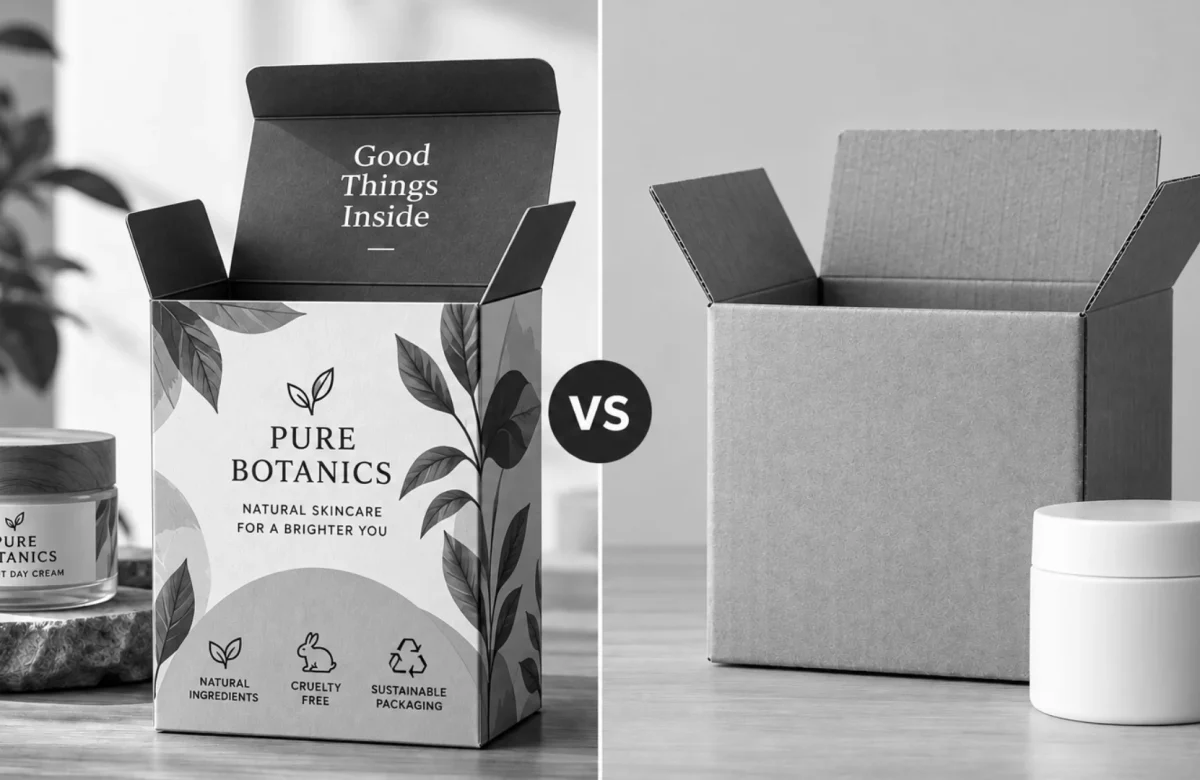
Custom packaging is built around your exact product and brand, typically starting at $1 to $3 per unit for printed folding cartons at 1,000 or more units, with a lead time of 8 to 12 weeks. Stock packaging is pre-made in standard sizes, available immediately, and typically costs $0.50 to $1.60 per unit with no minimum order. Choose custom when your product range is defined, and your brand needs to stand out on the shelf. Choose stock when you’re testing a product, launching fast, or working with a tight budget.
Key Takeaways
• Stock packaging costs less upfront and is available immediately, with no tooling fees or minimum order
• Custom packaging costs more per unit at low volumes but the gap narrows significantly as quantities increase
• Moving from 500 to 5,000 units can cut custom packaging cost per unit by 30 to 50 percent
• Custom packaging typically takes 8 to 12 weeks from design approval to delivery, stock is available same day or next day
• In our packaging work with Melbourne product brands, most businesses that start with stock packaging switch to custom once they’re past 500 units per product
How Do the Two Options Compare Side by Side?
| Factor | Custom Packaging | Stock Packaging |
| Cost per unit (low volume) | $1.00 to $5.00+ depending on format | $0.50 to $1.60 |
| Cost per unit (high volume) | Drops 30-50% at 5,000+ units | Stays roughly the same |
| Minimum order quantity | Typically 500 to 2,500 units | Often no minimum, buy as needed |
| Lead time | 8 to 12 weeks from approval | Available immediately |
| Branding | Full control, your colours, logo, finish | Limited, usually labels on a plain box |
| Product fit | Engineered to your exact product dimensions | Standard sizes, product may not fit perfectly |
| Tooling and setup fees | Yes, die cutting, plates, artwork setup | None |
| Sustainability control | Full choice of materials and certification | Limited to what’s available in stock |
| Best for | Established ranges, retail shelf, premium products | Testing, launches, low volume, tight budgets |
When Should You Use Stock Packaging?
Stock packaging makes the most sense when you’re testing a product concept, operating on limited startup capital, or need packaging immediately without waiting weeks for production.
If you’re launching a new product and genuinely aren’t sure how it will sell, stock packaging lets you get to market without committing thousands of dollars to custom boxes you might need to change later. A small ecommerce seller shipping 100 to 500 orders per month can expect to pay roughly $0.55 to $1.60 per unit for stock mailers or plain corrugated boxes, with no setup fees and no minimum order to meet.
Stock also works well for trade shows, seasonal promotions, or any situation where the packaging is temporary rather than permanent. Spending real money on custom packaging for a product that might change after its first season is a genuine waste, and stock avoids that risk entirely.
When Should You Switch to Custom Packaging?
Custom packaging becomes worth the investment once you have a defined product, a stable design, and enough volume to bring the per-unit cost down to a reasonable level, typically around 500 to 1,000 units per product.
The real trigger isn’t a specific revenue number or business size. It’s whether the product and its dimensions are settled enough that you won’t need to change the packaging again soon after ordering. In our packaging work with Melbourne product brands, the most common mistake we see is businesses ordering custom packaging too early, before the product itself is finalised, then needing to scrap and reorder when something changes. The second most common mistake is waiting too long, continuing to ship in generic stock boxes well past the point where the per-unit cost of custom would have been comparable.
How Much Does Each Option Actually Cost?
Stock packaging typically costs $0.50 to $1.60 per unit for standard mailers and corrugated boxes, with no setup fees. Custom packaging starts higher, typically $1 to $3 per unit for a printed folding carton at 1,000 to 3,000 units, and $4 to $12 per unit for a rigid box at 500 to 2,000 units.
The critical detail most comparisons leave out is how fast custom pricing drops with volume. Moving from 500 units to 5,000 units can cut the cost per unit by 30 to 50 percent, according to multiple packaging industry pricing guides published in 2026. At higher volumes, the per-unit gap between custom and stock narrows significantly, and in some cases disappears entirely once you factor in the branding and protection advantages custom provides.
Australian suppliers like PackQueen and The Boxman offer custom packaging with minimum orders as low as 50 to 500 units, which is lower than the 1,000 to 2,500 unit minimums that were standard across the industry a few years ago. This has made custom packaging genuinely accessible to smaller Australian businesses that would have been priced out previously.
What About Lead Time and Turnaround?
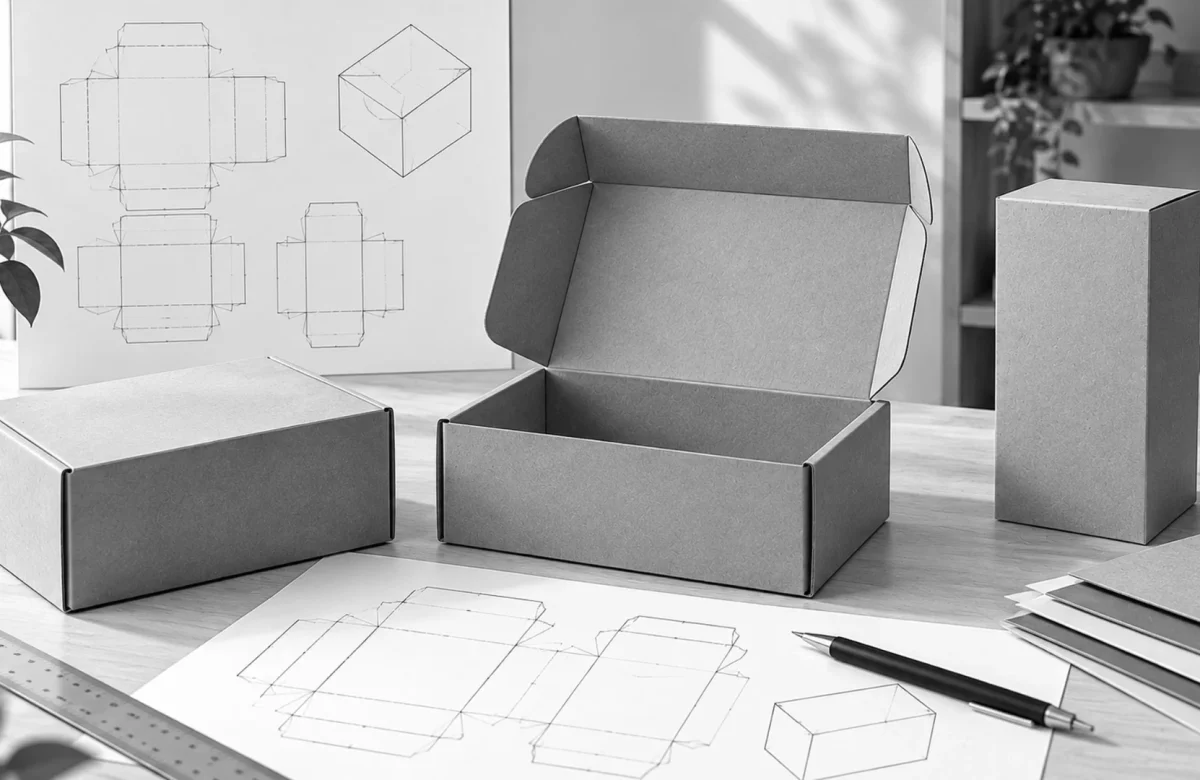
Stock packaging is available immediately, often same day or next day from a local supplier. Custom packaging typically takes 8 to 12 weeks from design approval to delivery, covering structural design, sampling, production, and shipping.
This is a genuinely important practical factor that pricing comparisons often skip over entirely. If you need packaging within a week, custom is simply not an option regardless of budget. The 8 to 12 week lead time for custom packaging means planning by at least two to three months, which requires a level of demand forecasting that many early-stage businesses aren’t yet able to do reliably.
Does Custom Packaging Actually Improve Sales?
Custom packaging consistently outperforms stock on perceived value and brand recognition, though the exact sales impact depends heavily on the product category and where it’s sold.
Products sold on a physical retail shelf benefit most, since custom packaging is often the only thing differentiating your product from competitors sitting directly next to it. Products sold online benefit differently, the unboxing experience and the perceived quality of the packaging affect repeat purchase rates and reviews rather than the initial sale itself.
In our experience working with product brands preparing for Australian retail shelves, the packaging design process behind custom packaging, getting the structure, materials, and print right before production, is where most of the real value sits, not just the decision to go custom in the first place.
Can You Start With Stock and Move to Custom Later?
Yes, and for many small businesses this is genuinely the most practical path rather than committing to custom packaging from day one.
A common, sensible approach is launching with stock packaging to validate the product and its market, then transitioning to custom once sales are consistent enough to justify the investment and the minimum order quantities. The transition works best when the packaging design is planned with the eventual custom switch in mind from the start, even if the first run ships in stock boxes, so the brand’s visual identity is already defined and ready to apply once the volume justifies it.
What If Your Product Doesn’t Fit Standard Stock Sizes?
If your product doesn’t fit any standard stock size well, you either end up with a box that’s too large, wasting material and looking cheap, or too tight, risking damage and making the product hard to remove.
This is one of the clearest practical signals that custom packaging has become necessary rather than optional. A product rattling around inside an oversized stock box doesn’t just look unprofessional, it can actually damage the product during shipping, leading to returns and replacement costs that often exceed what custom packaging would have cost in the first place. If you’re consistently adding filler material or void fill to make a stock box work, the cost of that filler plus the cost of the oversized box often adds up to more than a properly sized custom box would have cost per unit.
Frequently Asked Questions
Is custom packaging more expensive than stock packaging?
At low volumes, yes. Custom packaging typically costs $1 to $5 or more per unit depending on the format, while stock packaging sits around $0.50 to $1.60. The gap narrows significantly at higher volumes, and moving from 500 to 5,000 units can cut custom costs by 30 to 50 percent.
What is the minimum order for custom packaging in Australia?
Most manufacturers require 500 to 2,500 units for fully custom sizes. Some Australian suppliers now offer minimums as low as 50 units for select products, making custom packaging accessible to smaller businesses that would have been priced out previously.
How long does custom packaging take to produce?
Custom packaging typically takes 8 to 12 weeks from design approval to delivery, covering structural design, sampling, production, and shipping. Stock packaging is available immediately with no production wait.
Can I put my logo on stock packaging?
You can add branding to stock packaging through labels or stickers, but full custom printing, where the design is printed directly onto the box, typically requires custom packaging with a minimum order quantity.
When should a small business switch from stock to custom packaging?
Most businesses are ready to switch once they have a stable product design, consistent sales volume, and enough demand to order at least 500 to 1,000 units per product. Switching too early, before the product is finalised, risks expensive reprints if anything changes.
Does custom packaging reduce shipping damage?
Yes, because custom packaging is sized to the product’s exact dimensions, reducing movement during transit. Stock packaging in a non-matching size often requires additional filler material, which adds cost and doesn’t always prevent damage as effectively as a properly fitted custom box.
Conclusion
Custom packaging and stock packaging solve different problems at different stages of a business. Stock gets you to market fast and cheap. Custom builds your brand and protects your product once the range is stable. Saga Designs works with Melbourne product brands on packaging design planned for an eventual custom transition from the start. Get in touch for a free quote based on your product.