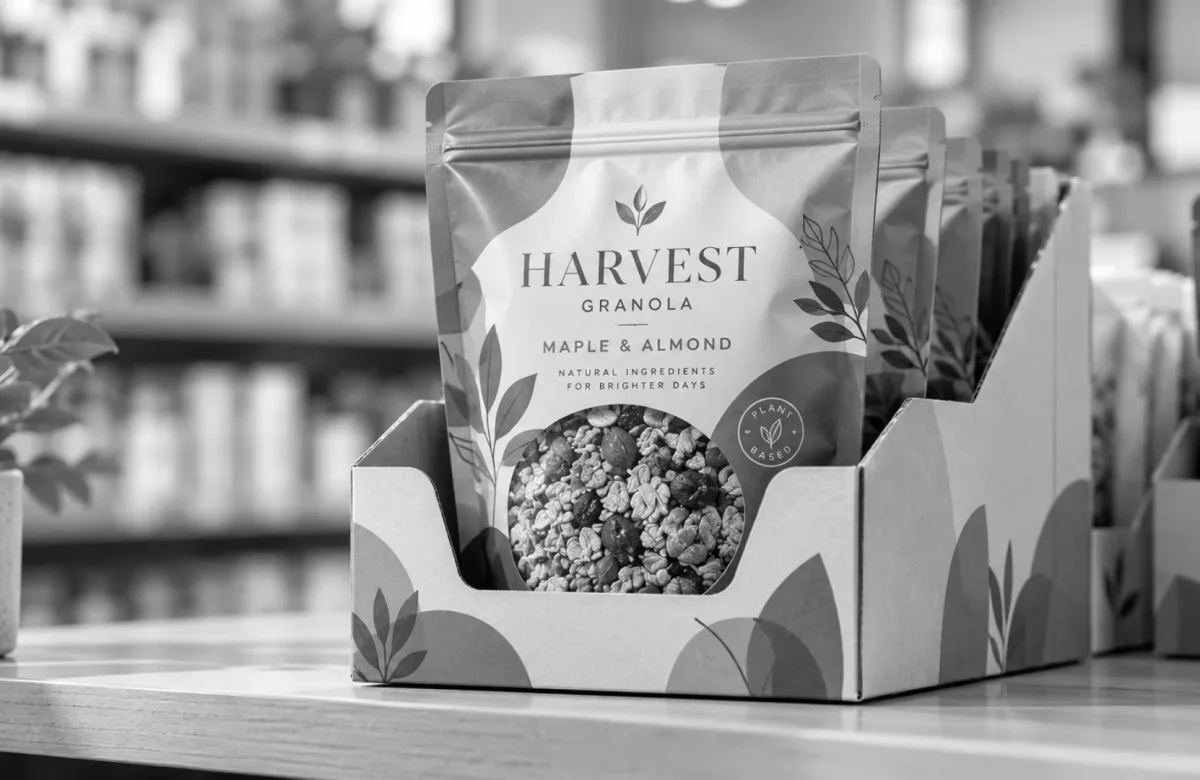
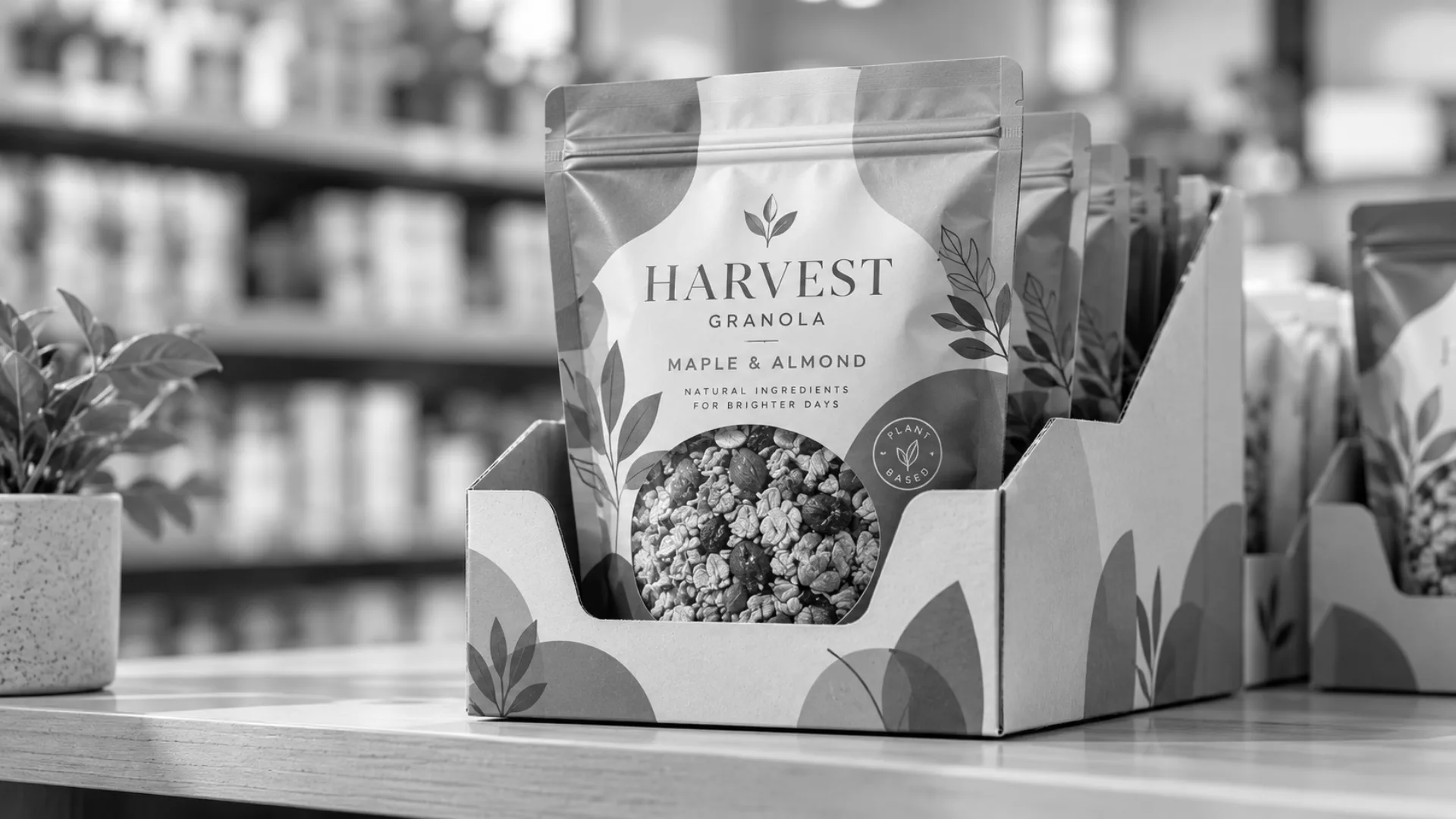
Shelf-ready packaging, sometimes called retail-ready packaging, is packaging designed so a product can go straight from its shipping carton onto the retail shelf without store staff unpacking or repacking it. In Australia, Coles and Woolworths have jointly developed a framework called the “five easies” that defines what shelf-ready packaging should achieve, and meeting these requirements is increasingly expected, not optional, for brands supplying major Australian retailers.
Key Takeaways
• Shelf-ready packaging eliminates the need for store staff to unpack individual products and place them on shelves one at a time
• Australian retailers Coles and Woolworths use a shared “five easies” framework to define what shelf-ready packaging should do
• Coles reported a 27% increase in sales density after introducing shelf-ready packaging to its stores
• Coles requires trade units not to exceed 10kg and cartons to stack 2 deep on the shelf
• Shelf-ready packaging is a structural design decision, not a graphic design decision, which is why it connects directly to how the package is engineered from the start
Introduction
If you’re a product brand supplying or planning to supply Australian supermarkets, shelf-ready packaging is something you’ll need to understand before your product reaches a store. Saga Designs, a packaging design agency in Melbourne, works with product brands preparing for retail, and shelf-ready packaging comes up constantly in that process.
If you’re still getting familiar with packaging generally, our guide on what packaging design actually involves is a good place to start before this one.
What Does Shelf-Ready Packaging Actually Mean?
Shelf-ready packaging means the product arrives at the store in a unit that can be placed directly on the shelf as a complete display, without store staff needing to open a shipping carton, remove individual items, and arrange them one by one.
The outer packaging, usually a tray or a perforated carton, is designed to be partially opened or torn along a scored line and placed on the shelf as is. The products inside are already arranged and visible, ready for customers to pick up. This saves a significant amount of stocking time per item, which is why major retailers have pushed for it so consistently.
What Are the “Five Easies” for Shelf-Ready Packaging in Australia?
The “five easies” is a real, named framework developed jointly by Coles and Woolworths to define what shelf-ready packaging should achieve. It covers identification, opening, shelf replenishment, shopping, and disposal.
Easy to identify. The packaging should clearly show what’s inside, using readable barcodes printed on multiple sides and clear product identification. “Shelf ready” should be printed on the flap so store staff can immediately recognise it as a shelf-ready unit rather than a standard shipping carton.
Easy to open. The outer packaging should open cleanly and quickly without tools, usually through a scored tear strip or perforated flap, without damaging the products inside or the display tray underneath.
Easy to replenish. The tray should fit standard retail shelf dimensions and slide into place with minimal adjustment. Coles specifically requires cartons to stack 2 deep on the shelf and trade units not to exceed 10kg, to meet safe handling requirements for store staff.
Easy to shop. Products inside the tray should be clearly visible and easy for a customer to pick up individually. Tray lips should be as small as practical so they don’t block the product’s front face or the label information a customer needs to see.
Easy to dispose. The outer packaging should be easy to flatten and recycle once the products have sold through. This connects directly to Australia’s broader packaging sustainability goals, which our guide on sustainable packaging design in Australia covers in more detail.
Why Do Australian Retailers Want Shelf-Ready Packaging?
Australian retailers want shelf-ready packaging primarily because it reduces the time and cost of stocking shelves, which is one of the biggest recurring labour expenses in a retail store.
Coles first introduced shelf-ready packaging to its stores in 2009. According to Matthews, a packaging technology company that works with Australian retailers, Coles’ sales density increased by 27% after introducing SRP, with customer numbers close to doubling from 9 million to 16 million per year. Those numbers aren’t entirely attributable to shelf-ready packaging alone, but they show the scale of operational improvement that faster, more efficient shelf stocking contributes to.
Woolworths sells approximately 9 billion items per year, and most of those go onto the shelf one at a time. Anything that reduces the time per item has a measurable, compounding effect at that scale, which is why both retailers have made shelf-ready packaging a genuine expectation for suppliers rather than an optional extra.
How Is Shelf-Ready Packaging Different From Standard Packaging?
Standard retail packaging protects the product during shipping and presents it to the customer. Shelf-ready packaging does both of those things plus a third, it functions as the display unit itself, removing a whole step from the stocking process.
With standard packaging, a store staff member opens a shipping carton, removes individual products, and places them on the shelf one at a time. With shelf-ready packaging, they open the outer tray, place the entire unit on the shelf, and move on. The difference in time per item is small, but multiplied across thousands of items per store per day, it becomes a genuinely significant operational saving.
Does Shelf-Ready Packaging Affect How a Product Looks on Shelf?
Yes, shelf-ready packaging directly affects how a product presents itself on a retail shelf, since the tray or outer packaging becomes part of the visible display rather than something removed and discarded in a back room.
This is where the structural design side of shelf-ready packaging connects to the visual design side. The tray lip height, the tear line position, and how much of the product’s label face is visible once the tray is opened all affect how a customer actually sees and interacts with the product. A tray that’s too tall blocks the product label. A tear line in the wrong position leaves cardboard visible where the brand should be showing. These are structural packaging design decisions, not graphic design decisions, and getting them wrong can undermine even the best-looking label or brand work.
Do Coles and Woolworths Have Different Requirements?
Yes, while both use the same “five easies” framework as a shared foundation, the specific technical specifications differ between the two retailers in ways that matter for production.
Coles requires trade units not to exceed 10kg and cartons to be stacked 2 deep on the shelf. Image specifications, barcode positioning, and pre-press expectations also differ between the two. Brands supplying both retailers need to confirm each retailer’s current specifications directly rather than assuming one set of artwork will satisfy both, since the differences are specific enough to cause rejection if overlooked.
When Should a Brand Start Planning for Shelf-Ready Packaging?
A brand should start planning for shelf-ready packaging before finalising its primary packaging design, not after, since the dimensions, weight, and configuration of the shelf-ready tray directly affect the size and shape of the individual product packaging inside it.
This is especially true for FMCG brands launching into Coles or Woolworths for the first time, where the shelf-ready requirements are a genuine part of the category review process, not something you sort out after you’ve already secured a listing. The tray configuration, how many units sit in the tray, and how many facings the tray creates on the shelf, needs to be considered alongside the primary packaging, not bolted on afterwards.
In our packaging work with Melbourne product brands preparing for retail, the most common timing mistake is designing the individual product packaging first, then trying to retrofit a shelf-ready tray around it afterwards. This often results in trays that don’t fit standard shelf dimensions, products that don’t sit stably inside the tray, or display faces that get blocked by tray walls that were added as an afterthought rather than planned from the start.
There is no single formula for determining the right tray configuration. It depends on shelf depth, which varies from store to store, rate of sale, which determines how many units need to be on shelf at any given time, and how many product facings the brand wants visible. Getting these decisions right requires a conversation with the retailer’s buying team early, not assumptions made in isolation.
What Happens if Your Shelf-Ready Packaging Doesn’t Meet the Retailer’s Specs?
If your shelf-ready packaging doesn’t meet the specific retailer’s requirements, it can delay or block your product from being listed or restocked, which is a real, practical consequence, not a theoretical risk.
Retailers like Coles and Woolworths have dedicated guidelines and supplier approval processes. A tray that exceeds the weight limit, doesn’t open cleanly, or doesn’t display the product face properly can be rejected at the distribution centre level before it ever reaches a shelf. For a brand that’s already committed to a production run, a rejection at this stage means redesigning and reprinting the outer packaging at your own cost, often under time pressure to meet a listing deadline.
This is one of the practical reasons shelf-ready packaging design works better when it’s handled by a designer or agency that already understands these retailer requirements, rather than being treated as a manufacturing afterthought.
Frequently Asked Questions
What is shelf-ready packaging?
Shelf-ready packaging is packaging designed so a product can go directly from its shipping carton onto the retail shelf without store staff needing to unpack and arrange individual items. The outer tray becomes the display unit itself.
Do Australian supermarkets require shelf-ready packaging?
It’s increasingly expected rather than formally mandated for all categories. Coles and Woolworths have both developed guidelines and specifications for suppliers, and meeting them is a genuine factor in getting and keeping a listing with either retailer.
What are the “five easies”?
A framework developed jointly by Coles and Woolworths defining what shelf-ready packaging should achieve: easy to identify, easy to open, easy to replenish, easy to shop, and easy to dispose. Each one has specific, practical requirements attached to it.
Does shelf-ready packaging cost more than standard packaging?
It can cost slightly more to design and produce initially, since it involves structural engineering of the outer tray as well as the individual product packaging. However, retailers often prefer it because it reduces their own stocking costs, which can improve your trading relationship and shelf allocation.
Can I use the same shelf-ready packaging for Coles and Woolworths?
Not always. While both retailers share the “five easies” framework, their specific technical specifications differ, including image requirements, barcode positioning, and carton depth rules. Confirm each retailer’s current specs directly before production.
Is shelf-ready packaging the same as retail-ready packaging?
Yes, the terms are used interchangeably across the Australian market. “Shelf-ready packaging” and “retail-ready packaging” both refer to the same concept.
Conclusion
Shelf-ready packaging is a structural and operational decision, not a cosmetic one, and for any brand supplying or preparing to supply Australian supermarkets, it’s increasingly a requirement rather than an option. Saga Designs works with product brands across Melbourne and Australia on packaging designed for retail from the start, including shelf-ready requirements. Get in touch for a free quote based on your product.