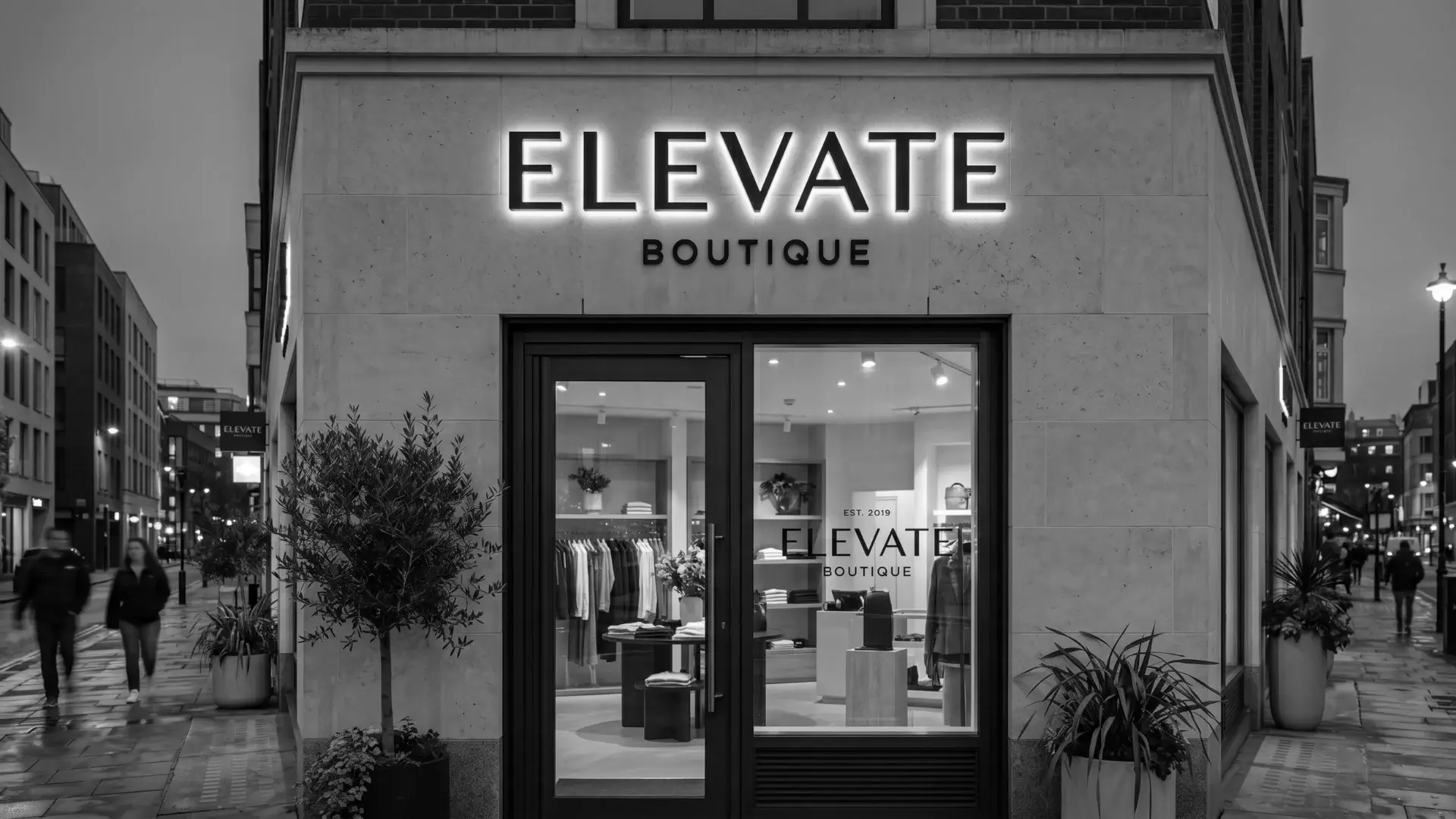
Signage is any visual display used to share a message with people around it. It can be a small sign on a shop door or a large LED screen on a busy street. Businesses use signage to guide customers, promote products, build brand awareness, and keep people safe.
Signage is all around us. From the “Open” sign on a café door to the large billboard on a highway, signs help people make decisions every day. For businesses, signage does much more than just display a name. It tells customers who you are, what you offer, and where to go. Understanding what signage is and how it works can help any business owner make smarter choices about how they present their brand to the public.
What Does Signage Mean?
Signage means any graphic or visual display used to share information with people. It can be printed, painted, or shown on a digital screen. Signs can be big or small, indoor or outdoor.
The word “signage” covers a wide range of visual tools. This includes things like a “Wet Floor” warning inside a shopping centre, a menu board at a café, a pylon sign outside a petrol station, or an LED screen at an airport. Each of these is a form of signage.
At its core, signage services are all about clear and effective communication for businesses. A good sign gets the right message to the right person at the right time, without the need for a conversation.
What Are the Main Types of Signage?
There are three main types: informational, promotional, and wayfinding signage. Each one serves a different purpose for businesses and their customers.
Informational Signage
This type of sign gives people the facts they need. It helps customers make choices or understand rules. Examples include menu boards, price tags, business hours signs, and safety notices.
A “No Smoking” sign in a workplace is a good example of informational signage. It tells people what they cannot do and why. These signs are found in almost every kind of business, from hospitals to offices.
Promotional Signage
This type of sign is built to sell. It uses bold colours, strong words, and eye-catching designs to get people to notice a product or service. Banners, window displays, and sale signs all fall into this group.
Promotional signage is designed to increase revenue. A well-placed “50% Off” banner in a shop window, for instance, can pull in foot traffic that would have otherwise walked right past.
Wayfinding Signage
This type of sign helps people find their way. It shows directions, locations, and entry or exit points. Shopping centres, hospitals, universities, and airports all rely heavily on wayfinding signs.
Good wayfinding signage makes visitors feel comfortable and confident. When people can find what they need without asking for help, the whole experience feels smoother for everyone.
What Is the Difference Between Indoor and Outdoor Signage?
Indoor signage guides and informs people inside a building, while outdoor signage attracts attention and builds brand awareness from the street.
Outdoor Signage
Outdoor signs are usually the first thing a customer sees. They need to be bold, easy to read, and built to handle the weather. Common types include:
• Pylon signs: tall signs often seen outside shopping centres or service stations
• Monument signs: low, solid structures near building entries
• Billboards: large signs along highways used for advertising
• Banners: flexible signs used for sales, events, or grand openings
In Australia, outdoor signage revenues have grown by more than 27% in a single year, with the market set to grow an additional 2.45% through to 2028, according to research by Custom Neon Australia. This growth reflects how much businesses rely on outdoor signs to get noticed.
Indoor Signage
Indoor signs take over once a customer steps inside. They create a welcoming environment and help people move around with ease. Businesses often invest in professional indoor signage solutions to improve customer experience, strengthen branding, and create better navigation inside commercial spaces. Common types include:
• Directional signs: arrows and labels showing where things are
• Retail displays: signs showing products, prices, and promotions
• Safety signs: warnings, evacuation routes, and compliance notices
• Digital screens: video or slideshow displays inside shops, offices, or waiting rooms
What Is Digital Signage and How Does It Work?
Digital signage uses electronic screens to display videos, images, and messages that can be updated in real time. It is now one of the fastest-growing forms of signage in Australia.
Instead of printing a new sign every time something changes, a business can simply update the screen’s content from a computer or phone. This makes digital signage very flexible and cost-effective over time.
According to IMARC Group, the Australian digital signage market reached USD 327.8 million in 2024 and is expected to grow to USD 655.8 million by 2033, at a compound annual growth rate of 7.41%. This tells us that more and more Australian businesses are moving to digital solutions.
Digital signage works especially well in:
• Retail stores: showing current promotions or new arrivals
• Restaurants and cafés: displaying menu boards that change throughout the day
• Offices: sharing company news, meeting room schedules, or welcome messages
• Healthcare settings: directing patients and reducing waiting room stress
Research from Custom Neon Australia found that nearly 70% of shoppers will purchase in a store where digital signage is visible. The same research showed that perceived waiting time drops by 35% where digital screens are present, which is great news for any business where queues are common.
Why Is Signage Important for Australian Businesses?
Signage is one of the most powerful tools an Australian business can use to attract customers and build a strong brand. It works around the clock, even when staff are not present.
According to Custom Neon Australia, 76% of consumers agree that signage is an essential part of the shopping experience. That same report found that 76% of customers will enter a store based on their impression of its signage alone.
For Australian businesses, this matters even more because of the country’s active outdoor culture and strong driving habits. This connection between signage design and walk-in customers is not just a statistic. It plays out directly on the street, where the right sign can be the difference between someone walking in or walking past.
People are exposed to signs on their way to work, while shopping locally, and while running errands. A well-placed, well-designed sign reaches potential customers at exactly the right moment.
Australia also has a high rate of local shopping, with 54% of Australians preferring to support local businesses, according to Custom Neon Australia’s research. This means a strong, visible sign outside a local store can directly turn foot traffic into paying customers.
Beyond attracting new customers, signage also:
• Builds brand recognition over time
• Communicates trust and professionalism
• Reduces the need for staff to repeat the same information
• Keeps workplaces safe by displaying warnings and instructions
What Are the Signage Rules and Regulations in Australia?
In Australia, signage must follow rules set by local councils, state planning laws, and federal legislation like the Disability Discrimination Act 1992. Getting this wrong can result in fines or removal orders.
The Australian Sign and Graphics Association (ASGA) is the peak body for the signage industry in Australia. It represents sign makers, graphic designers, sign installers, and apprentices across every state and territory.
Key rules every Australian business should know:
Local council approval: Most outdoor signs require a permit before installation. Rules vary by council and cover things like size, height, placement, and lighting. Many businesses make the mistake of assuming their sign is too small to need approval, without checking. This can lead to costly removal orders.
Australian Standard AS 1319: This standard covers workplace safety signage, including background colours, fonts, symbol layouts, and sizing. While it is not automatically law, it is widely used to show compliance with Work Health and Safety Acts across all states and territories, according to Printflex Australia.
Disability Discrimination Act 1992 (DDA): This federal law applies to all public spaces, including shops, cafés, banks, signage and transport. It means signs in public areas must be accessible to people with disabilities. The National Construction Code also requires Braille and tactile signage in specific building contexts, such as accessible parking and toilet signs.
Road signage standards: The AS 1742 series covers all road signs across Australia. This ensures that a “No Entry” sign in Perth looks the same as one in Brisbane.
What Makes Good Signage?
Good signage is easy to read, matches the brand, and gets the message across quickly. Most people only have a few seconds to take in a sign, so every design decision matters.
Here are the key elements of effective signage:
• Clear fonts: Choose easy-to-read typefaces. Avoid anything too decorative or thin.
• Colour contrast: Dark text on a light background (or the reverse) makes signs easier to read from a distance.
• Short messages: The fewer words, the better. People do not stop to read a paragraph on a sign.
• Brand consistency: Colours, logos, and tone should match everything else the business uses.
• Good placement: A sign that cannot be seen clearly is a sign that does not work.
• Durable materials: Outdoor signs need to hold up against sun, rain, and wind. See our breakdown of the best outdoor signage materials for Australian weather to choose the right option for your climate and location.
ProGroup Signs, an Australian signage company, notes that in 2026, minimalist design is leading the way. Clean lines, white space, and bold fonts are now preferred across most industries. Less clutter on a sign means the message gets through faster.
What Are the Latest Signage Trends in Australia?
In 2026, Australian businesses are focused on digital displays, sustainable materials, and personalised local signage. These trends reflect both new technology and changing customer values.
Alpha Lewis Signs, a Melbourne-based signage company, reports that digital signage with real-time content is one of the top trends in retail. Rather than replacing static signs with new prints every season, businesses are switching to screens that can be updated instantly.
Sustainability is also a big factor. More businesses are choosing recycled materials, low-VOC inks, and solar-powered LED signs. This appeals to the growing number of Australian consumers who prefer to support environmentally responsible brands.
Local personalisation is another emerging trend. Brands are tailoring their signage to specific Australian regions, using local references, language, and design styles. A Brisbane café might use tropical themes, while a Melbourne gym might draw on street art styles. This creates a stronger connection with local communities.
Frequently Asked Questions About Signage
What is signage used for in a business?
Signage is used to attract customers, share key information, promote products, guide visitors, and build brand recognition. It works as a silent salesperson, communicating with potential customers even when no staff member is present. Effective business signage can directly increase foot traffic and sales.
What is the difference between a sign and signage?
A sign is a single display used to share a specific message. Signage refers to the full collection or system of signs used in or around a space. For example, a hospital might have one sign at the entrance, but its signage system includes all the directional, safety, and informational signs throughout the building.
Do I need council approval for business signage in Australia?
Yes, in most cases. Australian local councils regulate outdoor signage through planning schemes that cover size, placement, lighting, and type. You should always check with your local council before installing any outdoor sign, even if the sign seems small. Failing to get approval can lead to removal orders and fines.
What is digital signage, and is it worth it for small businesses?
Digital signage uses electronic screens to display changing content like promotions, menus, or announcements. For small businesses, it can be a smart long-term investment because it removes the ongoing cost of printing new signs. It is especially useful for businesses that frequently update their offers or messaging.
What Australian standards apply to workplace signage?
The key standard is AS 1319:1994, which covers safety signs for occupational environments. It sets rules for colours, fonts, symbols, and sizing. While it is not always automatically the law, following it helps businesses demonstrate compliance with state and territory Work Health and Safety Acts. The Disability Discrimination Act 1992 also applies to all public-facing premises.
How much does business signage cost in Australia?
Costs vary widely depending on the type, size, materials, and complexity of the sign. A basic vinyl banner might cost a few hundred dollars, while a large illuminated pylon sign or a digital screen setup can run into the thousands. Getting multiple quotes from local signage companies is the best way to find a price that suits your budget and goals.
Key Takeaways
• Signage includes both indoor and outdoor signs used to inform, guide, promote, or warn people.
• There are three main types: informational, promotional, and wayfinding signage.
• Good signage uses clear fonts, strong colour contrast, and simple words.
• In Australia, the digital signage market was valued at USD 327.8 million in 2024 and is growing fast.
• Australian signage must follow rules set by local councils, the Disability Discrimination Act 1992, and Australian Standard AS 1319.
• Signage is one of the most cost-effective tools a business can use to attract new customers.
Conclusion
Signage is one of the simplest and most effective ways for a business to connect with its audience. From a small café sign to a large outdoor billboard, every sign plays a role in how a brand is seen and understood.
For Australian businesses, getting signage right means following local regulations, using quality materials suited to the local climate, and designing with the customer in mind. Whether you are starting fresh or updating old signs, the investment is always worth it.
If you are looking for expert help with signage design and production, SAGA Designs is a trusted name that can guide you from concept through to installation, ensuring your brand stands out for all the right reasons.