3D product visualisation cost in Australia typically ranges from $300 to $3,000 per product, depending on complexity. Traditional product photography runs from $500 to $8,000 per project. While photography looks cheaper upfront for a single product, 3D visualisation becomes significantly more cost-effective once you account for revisions, variants, and ongoing catalogue updates.
Choosing between 3D product visualisation and traditional photography is one of the most practical decisions a product business can make. Both produce images that end up on your website, social media, and marketing materials. But the cost structure, turnaround time, and long-term value are quite different.
For Australian businesses with growing product catalogues, the upfront price of 3D visualisation can feel like a hurdle. But when you break down what traditional photography actually costs over 12 months, including reshoots, variants, and post-production, the maths often flips. This guide walks you through the real numbers so you can make the right call for your business.
Key Takeaways
• Traditional product photography in Australia costs $500 to $8,000 per project, with hidden costs like studio hire, shipping, and retouching often doubling the quoted rate (Nexus Media Brisbane, 2024).
• A single 3D product model can generate unlimited angles, colour variants, and seasonal scenes without additional shoots.
• According to research by Modelry, digital renders are up to six times less expensive than traditional photography when producing multiple product variations.
• Australian e-commerce businesses using 3D visuals report fewer returns due to more accurate product representation.
• The right choice depends on your product type, catalogue size, and how often you need to update your visuals.
What Does Traditional Product Photography Actually Cost in Australia?
Traditional photography costs more than most businesses expect once they look past the per-image rate.
According to Nexus Media Brisbane (2024), a typical Australian product photography project runs $2,000 to $8,000 for higher-quality commercial work. Budget options start around $500 to $2,000, but that usually comes with trade-offs in quality, lighting, and post-production. Studio hire alone adds $100 to $300 per hour on top of photographer fees.
The Hidden Costs That Add Up Fast
The quoted rate rarely reflects the total cost. Here is what you also pay for:
Shipping and logistics. You need to get your physical products to the studio and back. For fragile or bulky items, this adds risk as well as cost.
Props and styling. A styled lifestyle shoot needs background elements, surfaces, and sometimes models. These are usually charged separately.
Retouching. Basic post-production is sometimes included, but detailed retouching runs $30 to $100 per image extra.
Reshoots. If the product changes, you go back to square one. A new colour, updated packaging, or a seasonal campaign means a new shoot and a new invoice.
According to a 2026 cost analysis by Nightjar, a brand with 500 products can spend $125,000 to $250,000 annually on traditional photography once all line items are included. That number gets most people’s attention.
How Much Does 3D Product Visualisation Cost in Australia?
3D product visualisation cost depends on product complexity, the number of views required, and the level of photorealism needed.
For a straightforward product like a bottle, canister, or small appliance, expect to pay $300 to $800 for a basic set of renders. Complex products with intricate textures, moving parts, or detailed surfaces run $1,000 to $3,000 and beyond. According to industry pricing data from 360 Render (2026), traditional 360 photo shoots cost $800 to $2,500 per product, while 3D rendering provides unlimited future revisions and colour variants without additional shoots.
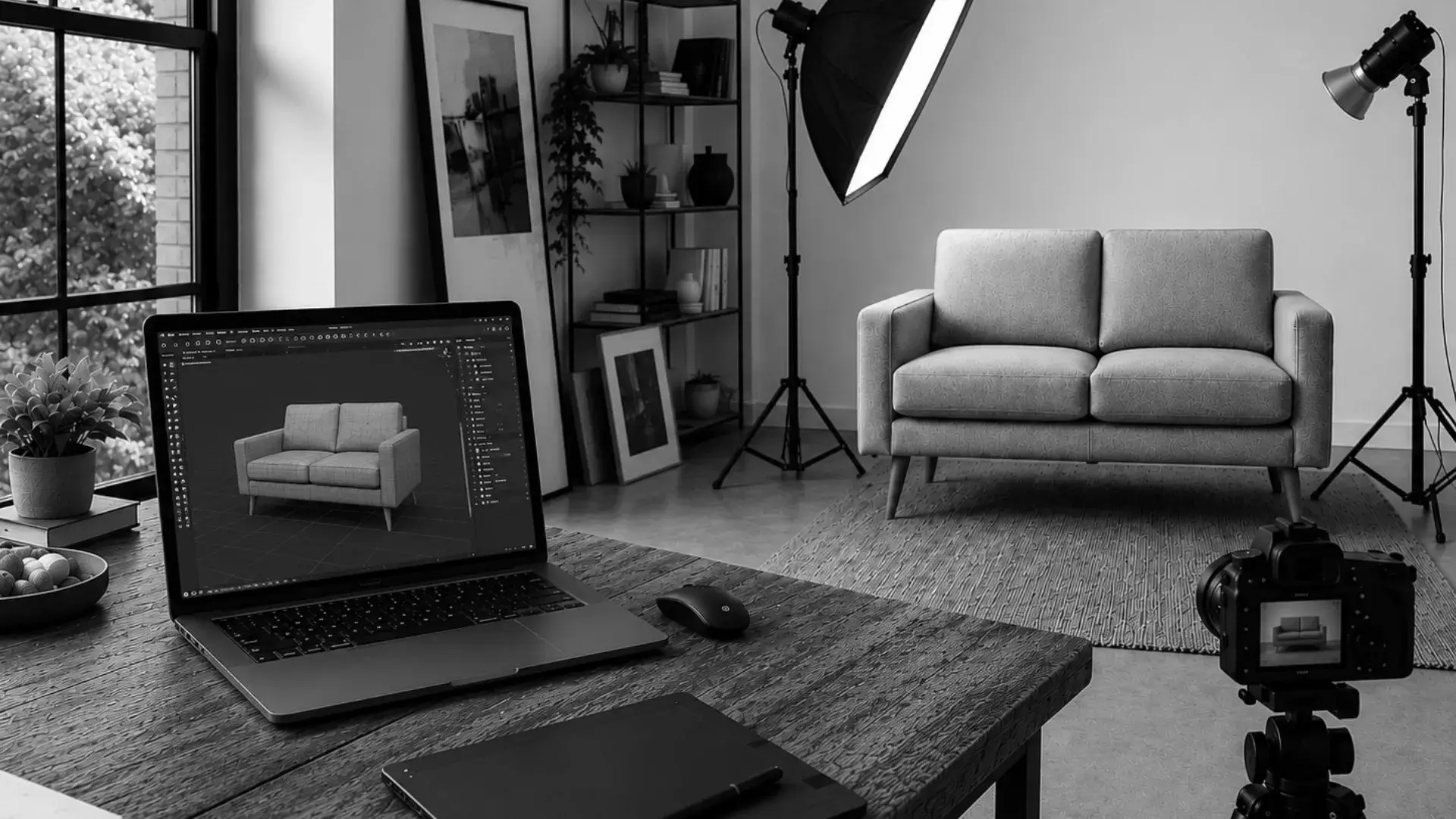
The Key Advantage: One Model, Endless Images
This is where the maths changes. Once a 3D model of your product exists, you can:
• Generate images from any angle without paying extra for setup
• Swap colours, materials, or finishes digitally without a new shoot
• Create seasonal lifestyle scenes by changing the background environment
• Produce 360-degree spin images, AR views, and video animations from the same file
For businesses with multiple SKUs or products that update regularly, like packaging, fashion accessories, or electronics, this reusability makes 3D visualisation dramatically cheaper over time.
Visual Lab, a Melbourne-based 3D packaging studio that has been operating in Australia and New Zealand for over 50 years, notes that 3D renders are generally more cost-effective for producing multiple variations or large-scale product catalogues (Visual Lab, 2024).
3D Visualisation vs Photography: A Direct Cost Comparison
Here is a practical comparison for an Australian business launching five product variations of the same item.
Traditional Photography (5 colour variants, 8 angles each = 40 images)
• Photographer fee: $1,500 to $3,000
• Studio hire: $400 to $800
• Props and styling: $200 to $500
• Retouching (40 images x $50): $2,000
• Shipping: $100 to $300
• Total: approximately $4,200 to $6,600
3D Product Visualisation (1 model, 5 colour variants, 8 angles each = 40 renders)
• 3D model creation: $800 to $2,000
• Colour variant renders (additional renders from the same model): $200 to $600
• Scene setup and lighting: $300 to $600
• Total: approximately $1,300 to $3,200
On top of the upfront savings, the 3D model stays on file. Next season, new colourways or a packaging update cost a fraction of what a full reshoot would.
When Does Traditional Photography Still Make More Sense?
3D visualisation is not always the right answer. Some products and some businesses are better served by real photography.
Products Where Photography Wins
Food and beverages. The subtle imperfections of a freshly poured drink, a glistening sauce, or a beautifully plated meal are very difficult to replicate digitally. Consumers also tend to trust real food photography more.
Handcrafted or artisan products. When the selling point is human craftsmanship, raw materials, or natural irregularity, a real photo communicates authenticity better than a render.
Small single-product businesses. If you sell one product and it rarely changes, a one-off photoshoot may be the simpler and cheaper option. The long-term reusability advantage of 3D diminishes when you only need it once.
Clothing and soft goods on models. While 3D clothing technology has improved significantly, fabric drape, movement, and fit on a real person still photograph more convincingly for most fashion categories.
Visual Lab (2024) puts it well: products that require a tactile or emotional connection may still benefit from traditional photography, though combining 3D renders with photography can offer the best of both approaches.
When Does 3D Visualisation Make More Sense?
3D product visualisation is the better investment in most other situations, particularly for product-based businesses in Australia looking to scale.
Products Where 3D Visualisation Wins
Hard goods and packaged products. Electronics, appliances, packaging, cosmetic containers, tools, and hardware all render beautifully. The surface qualities that matter most, like gloss, matte finishes, and label graphics, are easy to control digitally.
Products with multiple variants. If you sell the same item in ten colours or three sizes, 3D saves you from paying for ten separate photoshoots.
Pre-launch products. A 3D render can be created from CAD files or technical drawings before your product is even manufactured. This means your marketing assets are ready on day one.
Products for Amazon or ecommerce. Amazon sellers and Shopify stores benefit from consistent lighting, clean backgrounds, and multiple angles. 3D delivers all three with complete repeatability.
SAGA Designs provides 3D product modeling services for Australian businesses across product development, marketing, and ecommerce, creating photorealistic digital models from CAD files, sketches, or reference samples.
What Affects 3D Visualisation Cost the Most?
If you are getting quotes for 3D product visualisation, these are the factors that move the price up or down.
Product complexity. A simple rectangular box takes far less modelling time than a multi-component product with moving parts, transparent elements, or complex surface textures.
Number of views. Once the 3D scene is set up, additional camera angles are relatively affordable. The first image carries most of the setup cost. As 360 Render notes, thinking in “scenes” rather than individual images helps when budgeting.
Lifestyle or contextual scenes. A plain white background render costs less than placing the product in a styled kitchen, on a timber shelf, or in an outdoor setting. Each new environment takes time to build.
Revisions. Providing detailed reference images, accurate measurements, and a clear creative brief upfront keeps revision rounds low and total cost down.
For a deeper look at how 3D product modelling works in an e-commerce context, including platform integration and what to send your studio, see our guide on 3D product modelling for ecommerce.
Is the Quality Good Enough to Replace Photography?
This was a fair question five years ago. Today, the gap has mostly closed.
According to Shopify’s research on 3D product rendering, adding 3D visualisation to a product listing increases sales conversion by up to 94%. Brands including IKEA have been using CGI for product catalogues for years. According to 3D Source (2025), advanced rendering technologies now produce visuals that are often indistinguishable from traditional photographs.
The brands that notice quality issues with 3D renders are usually those that brief their studio poorly or choose the cheapest option available. A well-briefed, professionally rendered product image is reliable, clean, and consistent in a way that photography rarely matches.
Frequently Asked Questions
How much does 3D product visualisation cost in Australia?
3D product visualisation in Australia typically costs $300 to $800 for a simple product with a few angles, and $1,000 to $3,000 or more for complex products requiring detailed textures, multiple scenes, or lifestyle environments. The initial model creation is the highest cost. Once a model exists, additional renders and colour variants are significantly cheaper than a new photoshoot.
Is 3D product visualisation cheaper than traditional photography?
For a single product and a single set of images, costs can be similar. But 3D visualisation becomes considerably cheaper once you factor in multiple colour variants, repeat updates, and reusability. Research by Modelry found that digital renders can be up to six times less expensive than traditional photography when producing multiple product variations at scale.
Can I use 3D renders on Amazon and Shopify in Australia?
Yes. Amazon and Shopify both accept photorealistic 3D renders for product listings. Many large brands on both platforms use CGI imagery exclusively. The key requirement is that the images meet the platform’s technical specifications for background, resolution, and image size, which a professional 3D studio will handle as part of the delivery.
How long does it take to produce a 3D product render?
A straightforward product typically takes three to seven business days from brief to first render, depending on the studio’s workload and how detailed your product is. More complex projects with multiple environments and many angles take two to four weeks. Unlike photography, once the model is complete, generating additional views takes hours rather than days.
What do I need to provide to get a 3D product render?
Most Australian 3D studios work from CAD files, technical drawings, physical product samples, or detailed reference photos taken from multiple angles. The more information you provide upfront, the faster and more accurate the result. Exact dimensions, material specifications, and any Pantone colours are particularly useful.
Should small Australian businesses use 3D visualisation or photography?
Small businesses with a single product or a product that changes rarely will often find a one-off photoshoot simpler and more cost-effective. But if you have multiple colour variants, plan to update your product line, or want to create lifestyle imagery without expensive sets and models, 3D visualisation delivers better long-term value.
Conclusion
Traditional photography and 3D product visualisation both produce strong results. The difference comes down to your product type, catalogue size, and how much value you place on being able to update and reuse your assets quickly.
For most Australian businesses with more than one product or regular catalogue updates, 3D visualisation costs less over time and gives you far more flexibility. For food, artisan goods, or a single flagship product, a well-executed photoshoot may still be the right call.
SAGA Designs helps businesses across Melbourne and Australia make this decision with confidence. Our 3D product modeling service delivers photorealistic renders from technical drawings, CAD files, or physical samples, ready for e-commerce, marketing, and brand use. Get in touch, and we would love to show you what is possible for your product.