

TL;DR
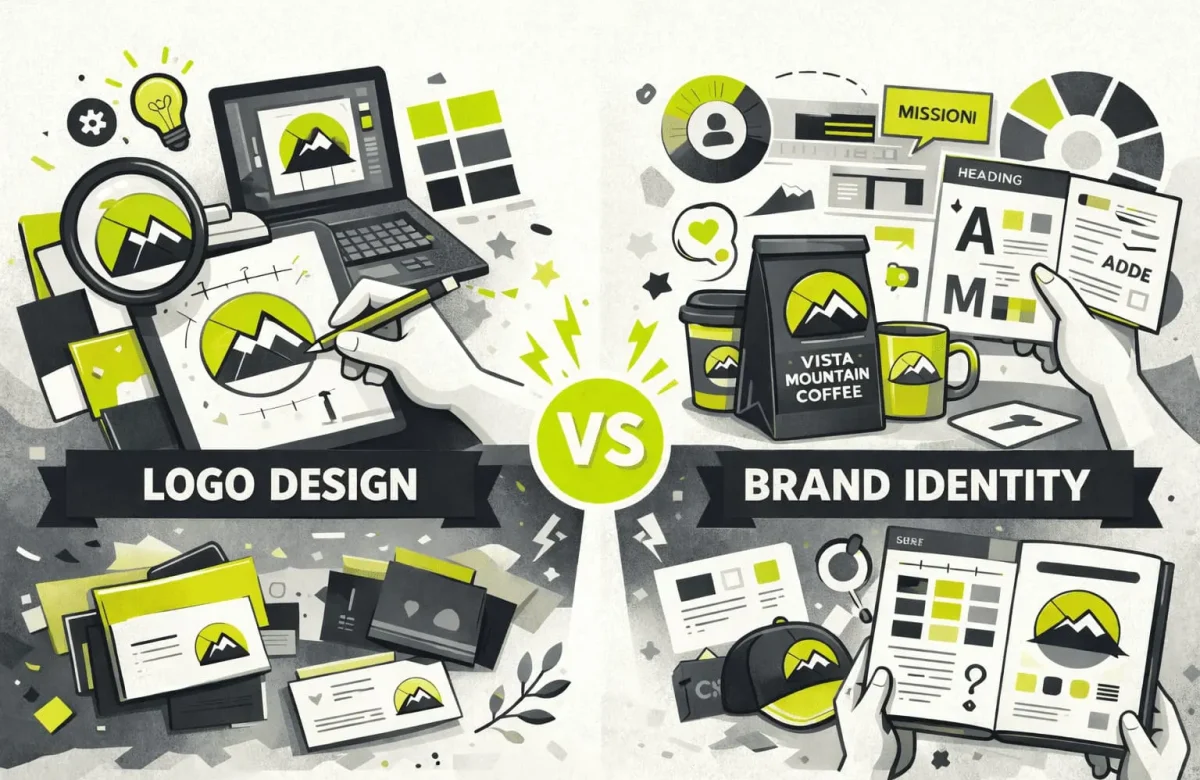
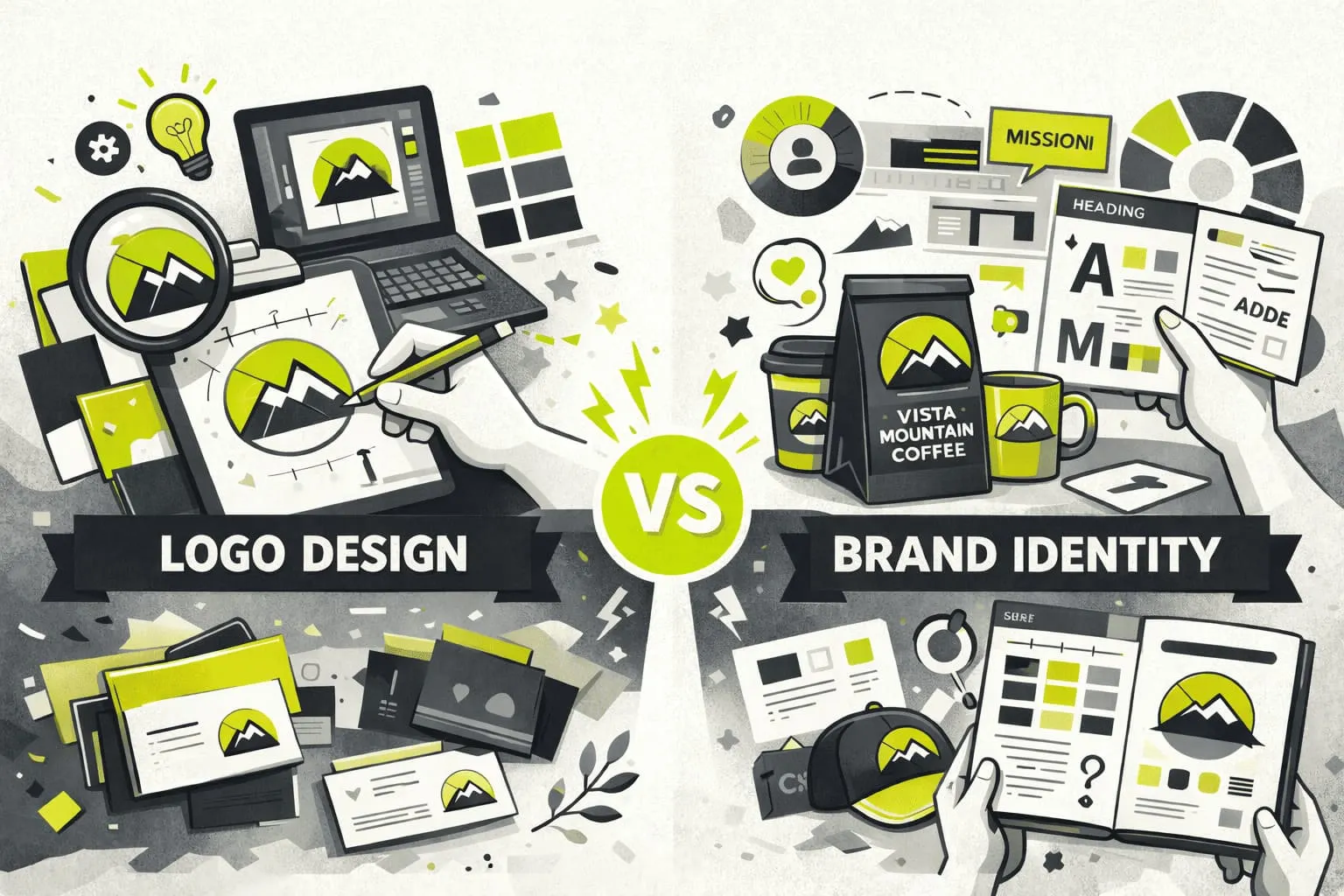
Logo design and brand identity are not the same. A logo is a single visual mark that helps people recognize your business, while brand identity is the complete visual and messaging system that defines how your brand looks, sounds, and feels across all platforms. A logo supports recognition, but brand identity builds consistency, trust, and long-term brand equity. Businesses that invest only in a logo may struggle with clarity and scalability, while those that develop a structured brand identity system create stronger market positioning and more cohesive customer experiences. If you want sustainable growth, think beyond the logo and build a complete brand foundation.
Introduction
Logo design is the creation of a visual symbol that represents a business, while brand identity is the complete system of visual and verbal elements that shape how a brand looks, feels, and communicates across every platform. In simple terms, your logo is your face, but your brand identity is your personality.
Many business owners use “logo design” and “brand identity” as if they mean the same thing. They do not. This confusion often leads to underinvestment in branding or unrealistic expectations from a logo alone. A logo can help people recognize your business, but it cannot define how your brand speaks, presents itself, or builds trust over time.
Today, markets are crowded. Social media platforms, websites, packaging, advertising, and digital experiences all compete for attention. A standalone logo is no longer enough to build recognition or create consistency. Businesses need a clear visual and messaging system that works across every touchpoint.
This guide explains the difference between logo design and brand identity, how each works, and which one your business actually needs. At Saga Designs, we often see companies confuse logo design with full brand identity, which is why understanding this distinction early can prevent costly redesigns and strategic setbacks later.
What Is Logo Design?
Logo design is the process of creating a unique visual mark that represents a company, product, or organization. Many businesses start with professional logo design services to establish a strong visual foundation before expanding into a full brand identity system.
A logo is a graphic element that identifies a brand in its simplest form.
A logo may include:
- A wordmark (text-only, like Google)
- A symbol or icon (like Apple)
- A combination mark (text + symbol)
- A lettermark or monogram
Its primary job is identification.
It does not explain your brand story. It does not define your messaging. It does not control your tone. It simply identifies you.
What Is Brand Identity?
Brand identity is the complete visual and communication system that expresses your brand’s personality, values, and positioning.
Brand identity shapes the tangible expression of a brand across every touchpoint.
A typical brand identity system includes:
- Logo variations
- Color palette
- Typography system
- Iconography style
- Photography guidelines
- Graphic elements and patterns
- Tone of voice guidelines
- Brand messaging principles
- Usage rules and brand guidelines
It ensures consistency across websites, packaging, social media, advertising, signage, and print materials.
Brand identity answers:
How should the brand look?
How should it sound?
How should it feel?
Why Choosing the Right Approach Matters
The difference between logo design and brand identity directly impacts business growth.
A logo alone creates recognition.
A brand identity creates recognition plus emotional connection.
Consistent brand presentation can increase revenue by up to 23%. Consistency only happens when a brand identity system exists.
Without brand identity:
- Marketing looks inconsistent
- Social media visuals feel disconnected
- Packaging appears unrelated
- Customers struggle to remember you
Strong brand identity builds trust, clarity, and long-term equity. Businesses that invest in a structured brand identity design process are better positioned to maintain visual consistency across digital, print, and packaging touchpoints.
How Logo Design Fits Inside Brand Identity
Think of brand identity as a house.
The logo is the front door.
Important, yes.
But the house also includes architecture, paint, furniture, lighting, and layout.
Here is the relationship in simple structure:
Brand Strategy → Brand Identity → Logo Design
Logo design is a component of identity. Identity is built on strategy.
If strategy is unclear, both identity and logo will feel weak.
Step-by-Step: How Logo Design Is Created
Step 1: Brief and Discovery
Designers gather information about the business, target audience, competitors, and positioning.
Step 2: Concept Development
Sketches and digital drafts are created. Different visual directions are explored.
Step 3: Refinement
Selected concepts are refined, typography is adjusted, spacing corrected, and scalability tested.
Step 4: Final Delivery
Final files are prepared in multiple formats for digital and print use.
Logo design focuses mainly on visual clarity and memorability.
Step-by-Step: How Brand Identity Is Developed
Brand identity is broader and more strategic.
Step 1: Brand Strategy Foundation
This includes defining:
- Target audience
- Brand positioning
- Value proposition
- Brand personality
- Competitive differentiation
Step 2: Visual System Creation
The logo is developed alongside:
- Color systems
- Typography hierarchy
- Visual style elements
- Graphic language
Step 3: Messaging Framework
Tone of voice guidelines are defined. Messaging pillars are established.
Step 4: Brand Guidelines
A structured brand book ensures consistent application across all platforms.
Step 5: Application Design
The identity is tested on:
- Website layouts
- Social media templates
- Packaging
- Business cards
- Advertising materials
A well-developed brand identity ensures consistency and scalability, especially when built through professional brand identity design services that align visuals with long-term strategy.
Logo Design vs Brand Identity: Key Differences
| Aspect | Logo Design | Brand Identity |
| Scope | Single visual mark | Complete visual + messaging system |
| Purpose | Recognition | Recognition + perception + trust |
| Depth | Visual only | Visual + verbal + strategic |
| Deliverables | Logo files | Logo + guidelines + system |
| Impact | Short-term identification | Long-term brand equity |
Logo design is tactical.
Brand identity is strategic.
Real-World Examples
Apple Inc.
The Apple logo is a simple bitten apple symbol.
But Apple’s brand identity includes:
- Minimalist design language
- Clean typography
- Consistent product photography
- Premium packaging
- Simple messaging tone
The logo alone does not create the brand. The identity system does.
Nike, Inc.
The Nike Swoosh is globally recognized.
However, Nike’s brand identity includes:
- Bold athletic imagery
- Motivational messaging
- Strong black-and-white contrast
- Performance-focused tone
The Swoosh identifies. The identity inspires.
Pros and Cons
Logo Design Only
Pros:
- Lower cost
- Faster turnaround
- Good for early-stage startups
Cons:
- Limited strategic depth
- No consistency system
- Harder to scale visually
Working with experienced logo design specialists can help ensure your mark is versatile, scalable, and aligned with your industry positioning.
Full Brand Identity
Pros:
- Stronger market positioning
- Clear communication guidelines
- Better marketing consistency
- Higher trust perception
Cons:
- Higher investment
- Longer development timeline
Common Mistakes Businesses Make
- Thinking a logo alone builds a brand.
- Copying competitors’ visual styles.
- Skipping strategy and jumping to design.
- Not creating brand guidelines.
- Using inconsistent visuals across platforms.
These mistakes weaken credibility and limit growth.
Best Practices
- Start with brand strategy before visual design.
- Design logo within a complete identity system.
- Build clear brand guidelines.
- Test identity across real applications.
- Prioritize consistency over trends.
Consistency is more powerful than visual complexity.
Frequently Asked Questions
Q: Is a logo part of brand identity?
A: Yes. A logo is one component of brand identity. Brand identity includes the logo along with colors, typography, imagery style, tone of voice, and brand guidelines that ensure consistency across touchpoints.
Q: How much does brand identity cost compared to logo design?
A: Logo design is typically less expensive. Brand identity includes strategy, guidelines, and applications, which increases cost and depth.
Q: What comes first, logo design or brand identity?
A: Brand strategy should come first, followed by brand identity development. The logo is created as part of the identity system.
Q: Do small businesses need brand identity or just a logo?
A: Small businesses benefit from brand identity because consistency builds credibility. While a logo may be enough initially, long-term growth requires a structured identity system.
Q: Which is more important, logo or brand identity?
A: Brand identity is more important strategically because it defines the full perception of a business. A logo supports recognition, but brand identity builds trust, consistency, and long-term brand value.
Key Takeaways
- Logo design is a single visual mark.
- Brand identity is the full visual and messaging system.
- A logo identifies. Brand identity builds perception.
- Strategy should guide design decisions.
- Consistency increases trust and revenue.
- Growing businesses benefit from full identity systems.
Conclusion
Understanding the difference between logo design and brand identity is essential if you want to build a brand that lasts. A logo helps people recognize your business, but a structured brand identity shapes how they perceive it. One creates identification. The other builds consistency, trust, and long-term equity.
Businesses that treat branding strategically make clearer design decisions, communicate more effectively, and scale with greater confidence. Whether you are launching a new venture or refining an existing one, clarity between logo design and brand identity prevents costly revisions and misaligned messaging down the line.
At Saga Designs, we believe strong brands are built on strategy first and visuals second. Not sure whether you need a logo refresh or a complete brand identity system? Start with clarity and contact our team to build a foundation that supports where your business is heading next.