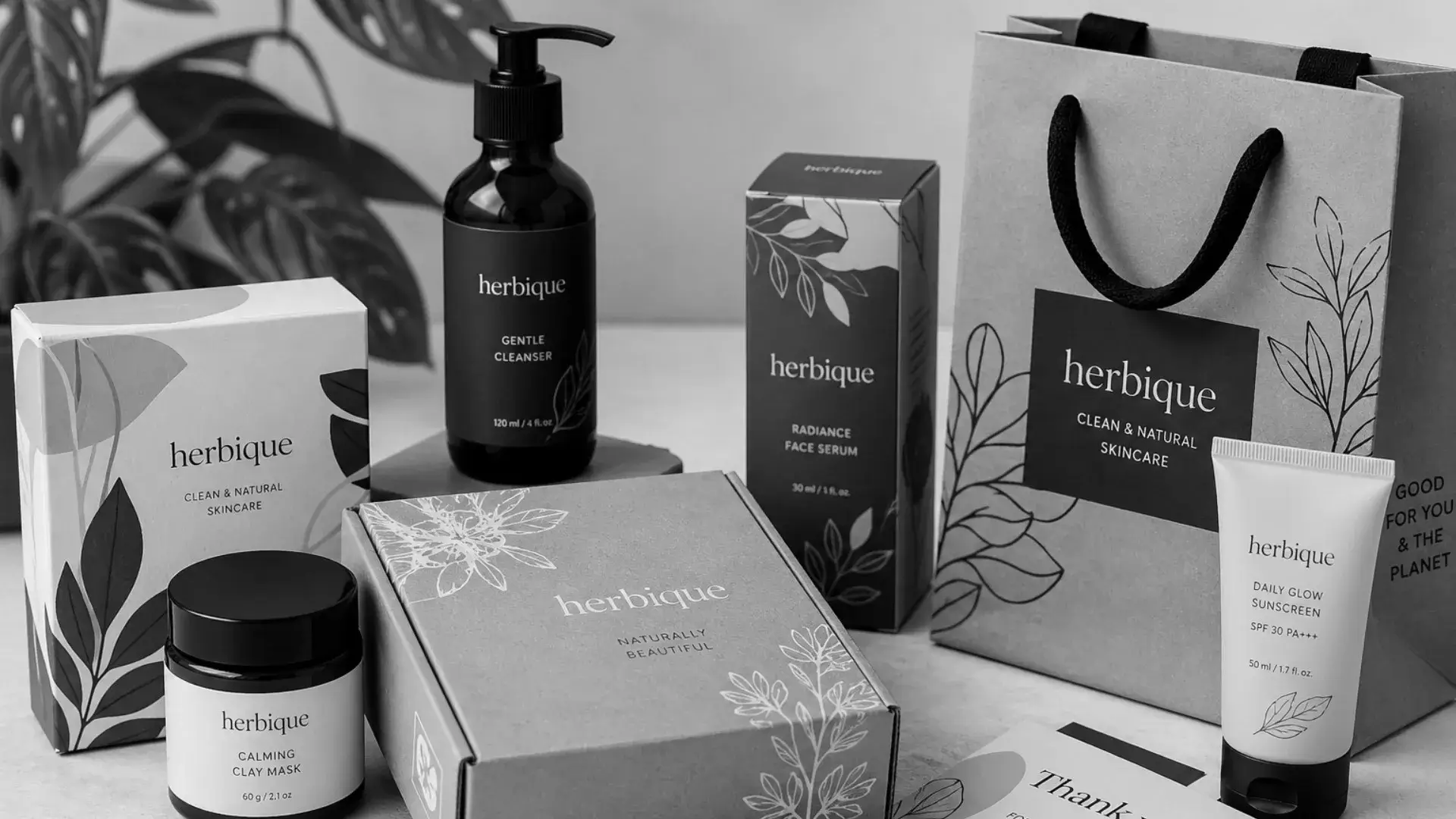
Packaging design is the process of creating the look, structure, and feel of a product’s outer covering. It includes everything you see and touch, from the shape of the box and the colours on the label to the fonts, materials, and even how easy it is to open. Good packaging design protects your product and tells your brand story at the same time. Package design is another term for packaging design and covers the visual and physical design of a product’s packaging.
If you’ve ever picked up a product because it looked good before you even read what it did, packaging design is why.
Key takeaways
• Packaging design includes the visual, structural, material, and copywriting elements of a product’s outer covering.
• It influences buying decisions, brand perception, and even shipping costs.
• There are different types: primary, secondary, tertiary, and label design.
• The design process includes discovery, research, concepts, refinement, and production.
• Good packaging design balances aesthetics, function, and brand consistency.
• Cost varies based on scope, but investing properly saves money in the long run.
• Packaging design is an application of your broader brand identity.
Why does packaging design matter so much?
Packaging is often the first thing a customer sees. Before they read a review or visit your website, they see your box on a shelf or in a photo online.
Studies show that around 72% of consumers say packaging design influences their buying decision. That’s huge. It means your packaging is not just wrapping, it’s marketing.
A well-designed package can make your product look premium, trustworthy, and worth the price. A poorly designed one can make even a great product feel cheap.
Beyond sales, packaging design also affects things like:
• How well your product ships without damage
• How easy it is to store on a shelf
• Whether customers keep the box or recycle it
• How your product looks in photos and on social media
What does packaging design actually include?
Packaging design covers more than just slapping a logo on a box. Here’s what goes into it when you work with professional packaging design services.
Visual design
This is the graphic part: colors, fonts, illustrations, photography, and layout. The goal is to make the package look right for the brand and appealing to the target customer.
A kids’ snack brand and a luxury skincare line need completely different visual approaches, even if both use the same box shape.
Structural design
This is the physical form of the packaging. How is it shaped? How does it open and close? What materials is it made from? Structural designers think about things like stackability, protection during shipping, and how the package feels in your hands. Structural designers think about things like stackability, protection during shipping, and how the package feels in your hands. The physical form of a package goes through its own structural packaging design process.
Copywriting and messaging
The words on your package matter. Ingredient lists, usage instructions, brand taglines, and certifications all need to be written clearly and placed properly. This is part of packaging design, too.
Material selection
Cardboard, glass, plastic, and biodegradable materials each have trade-offs. Your packaging designer helps choose materials that fit your product, your budget, and your sustainability goals.
Printing and finishing
Foil stamping, embossing, matte vs. glossy finishes, spot UV coating, these finishing touches change how a package feels and looks. They also affect printing costs.
What is packaging design in graphic design?
Packaging design is a branch of graphic design that focuses on how a product is presented through its packaging. It combines visual elements such as typography, colour, imagery, layout, and branding with the physical requirements of the package. Unlike a standard graphic design project, packaging design also needs to work with dimensions, materials, printing methods, and how the package is produced.
What are the different types of packaging design?
Packaging design is not one-size-fits-all. Different products need different packaging solutions.
Primary packaging
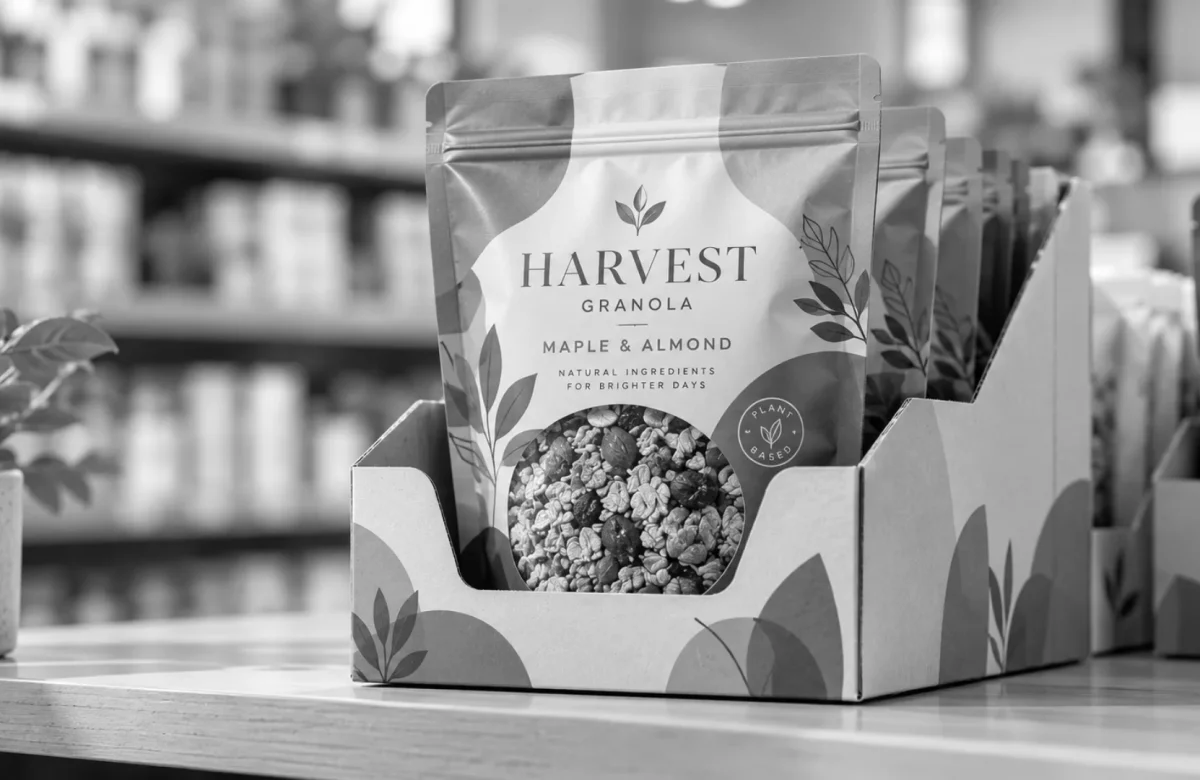
This is the packaging that directly holds the product. A bottle of perfume, a cereal box, a skincare tube. This type of packaging gets the most design attention because it’s what the customer actually uses and holds. This is especially important for products sold through supermarkets and other high-volume retail channels. This is especially important for products sold through supermarkets and other high-volume retail channels, where FMCG packaging design has its own set of rules.
Secondary packaging
This is the outer layer of the shipping box, the gift wrap, and the tray that holds multiple units. Secondary packaging protects the primary packaging and often carries branding too.
Tertiary packaging
This is the bulk packaging used for transporting goods, like pallets and shrink wrap. Less focused on brand design, more focused on function and durability.
Label design
For products like wine, hot sauce, or supplements, the label is the packaging design. It goes on a pre-made bottle or container. Label design requires working within a small space while still communicating a lot.
How does the packaging design process work?
If you’re working with a professional packaging design team, here’s roughly what the process looks like. If you’re working with a professional team, the packaging design process typically follows a set of stages
1. Discovery and briefing
The designer learns about your brand, your product, your target customer, and your competitors. They ask a lot of questions. This is where the direction gets set.
2. Research and strategy
Good designers study the market before they sketch anything. They look at what competitors are doing, what trends exist in your industry, and what your target customer responds to.
3. Concept development
The design team creates initial concepts. These are usually a few different visual directions to explore different colors, layouts, and feels. You give feedback on what’s working.
4. Refinement
One or two directions will be developed further based on your feedback. Typography gets refined. Colors get dialed in. The layout gets polished.
5. Production files
Once approved, the designer prepares print-ready files with the correct specs for the printer or manufacturer. This step matters a lot; a file error here can cause expensive reprints.
6. Printing and review
Prototypes or print runs happen. Often, there’s a review stage with physical samples before the full production run.
What makes packaging design good?
Good packaging design does several things at once.
It catches attention on a shelf or in a scroll. It communicates what the product is and who it’s for. It makes the brand feel trustworthy and consistent. It functions well physically. And it holds up through shipping, storage, and daily use.
The best packaging design feels obvious in hindsight. You look at it and think, “Of course it looks like that.” That simplicity is usually the result of a lot of work and thinking.
Some specific things that separate good packaging from bad packaging:
• Clear hierarchy, the most important information is easy to find first
• Color that works both for brand identity and for visibility
• Readable typography, especially at small sizes
• Materials that match the brand positioning, a premium product in cheap packaging, create a mismatch
• Sustainability, more consumers and retailers care about this now
If you’re developing packaging from scratch, these custom packaging design tips can help you make decisions around structure, visuals and production.
How much does packaging design cost?
This varies a lot depending on who you hire and what you need.
A freelancer might charge a few hundred dollars for a simple label. A full-service packaging design agency in Australia might charge anywhere from $3,000 to $20,000 or more for a complete packaging system, depending on complexity, number of SKUs, and what’s included. The cost of packaging design in Australia depends on a few specific factors worth understanding before you set a budget.
The cost usually covers discovery, concept development, revisions, and production-ready files. Printing and manufacturing are typically separate.
It’s worth investing properly here. Redoing packaging after launch because it’s not converting is far more expensive than getting it right the first time.
What’s the difference between packaging design and branding?
Branding is the big picture: your brand’s personality, values, tone of voice, color palette, logo, and positioning. Packaging design applies that branding to a physical (or digital) product format.
Think of branding as the rulebook and packaging design as one of the ways you play by those rules.
A strong branding system makes packaging design easier and more consistent. If you haven’t done proper brand work, packaging design becomes harder because there’s no foundation to build on.
Frequently asked questions about packaging design
What is the main purpose of packaging design?
The main purpose is to protect the product and communicate the brand. It needs to keep the product safe during shipping and storage, while also attracting the right customer and conveying what the product is about.
Can packaging design affect how much a product sells?
Yes, directly. Packaging design affects whether someone picks up your product in a store, whether they click on it online, and whether they buy it again. It’s one of the most direct marketing touchpoints a product has.
What software do packaging designers use?
Most professional packaging designers use Adobe Illustrator for vector artwork and layouts, Adobe Photoshop for image editing, and sometimes 3D software like Adobe Dimension or Cinema 4D to visualize how the packaging will look before it’s printed.
How long does packaging design take?
A simple label design might take one to two weeks. A full packaging system with multiple product lines could take two to four months. It depends on the scope, the number of revisions, and how quickly approvals happen on your side.
Do I need a packaging design agency or can I use a freelancer?
Both can work. A freelancer is often more affordable and faster for smaller projects. A packaging design agency brings more resources, strategic thinking, and production support, which matters for more complex projects or when you need to launch multiple products at once.
What is sustainable packaging design?
Sustainable packaging design means choosing materials and formats that reduce environmental impact. This includes using recyclable or compostable materials, reducing excess packaging, designing for flat shipping, and using soy-based inks. Many consumers and retailers now expect this.
Does my packaging design need to change for different countries?
Sometimes. Different markets have different labeling laws, language requirements, and cultural expectations. If you’re selling internationally, your packaging design needs to account for this from the start.
Conclusion
Packaging design is one of those things that works quietly in the background. When it’s done well, you don’t notice it; you just reach for the product. When it’s done badly, the product sits on the shelf.
If you’re serious about your brand, packaging design deserves serious attention. It’s not an afterthought. It’s one of your most visible and most consistent brand touchpoints.
At SAGA Designs, we work with brands across Australia and beyond to create packaging that actually works, not just packaging that looks nice in a presentation. As a packaging design agency in melbourne, we bring both creative thinking and production knowledge to every project, and brands trust us. Whether you’re launching a new product or refreshing an existing line, we can help you build packaging that earns its place on the shelf. Reach out to the team at SAGA Designs to talk about your next packaging project.